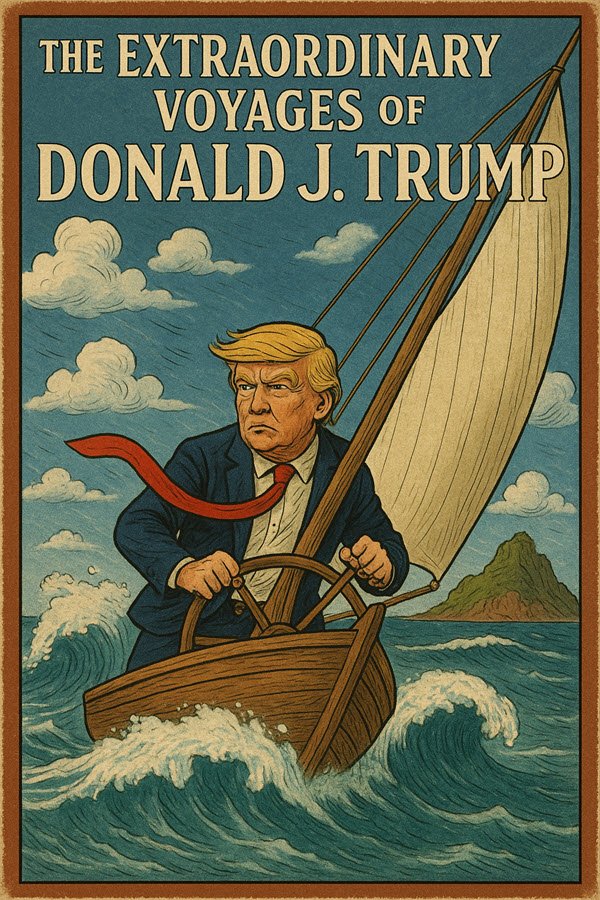
Morning in the age of action, unencumbered by structure, thoughtful planning, and courage undiluted by consequence.
Good morning. One hopes the coffee has been prepared for extra strength, for the Republic has awakened to discover itself engaged in several enterprises at once: a war not formally declared, an oil harvest not formally stated, a naval ballet with Russia performed in international waters, an off-the-cuff threat against an ally sworn to mutual defense, and the revival of an old falsehood thought, until recently, to have been buried with suitable embarrassment.
Congress, meanwhile, studies its footwear (shoes) with the gravity of scholars examining a great moral text.

We begin, as one must, at the moment when prudence quietly and softly exited the room.
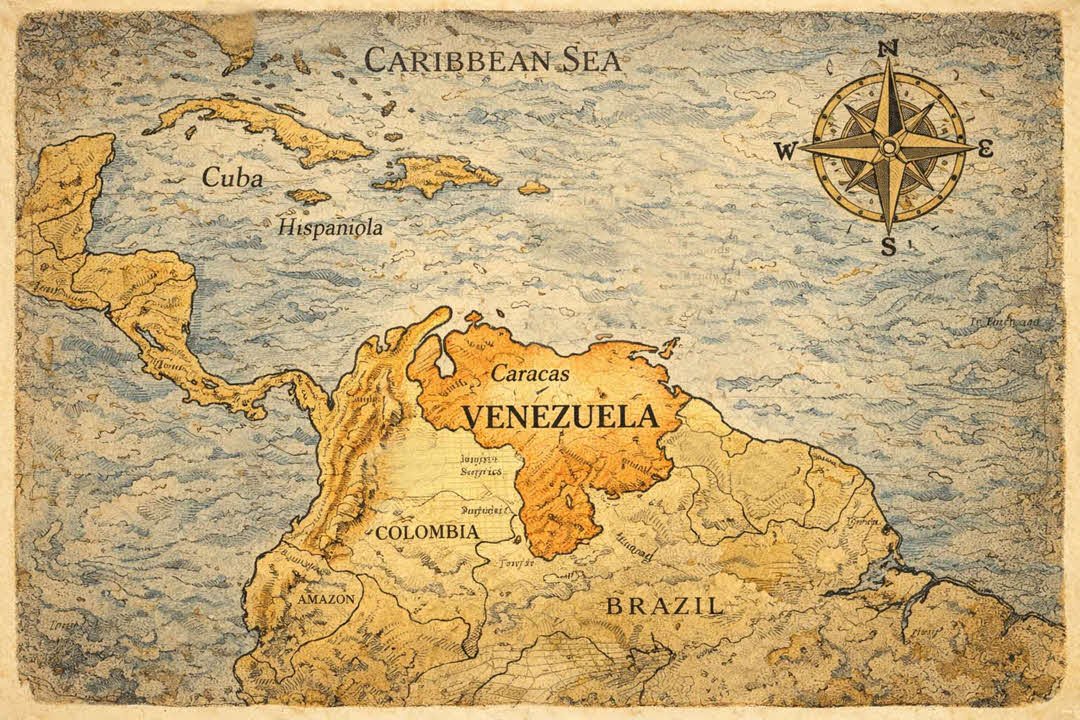
The President did not merely raise tensions with Venezuela; he removed the country from the category of “foreign complication” and placed it neatly into “completed action.” Since this is now a completed action, he is very proud indeed.
U.S. forces struck targets, seized the Venezuelan leader in a nocturnal display of efficiency, and promptly announced plans to extract vast quantities of oil—some fifty million barrels—to be sold at market price, with the proceeds placed under presidential stewardship “for the benefit of the people.” Which people, alas, was left to the imagination and inventiveness of us all, though certain corporations appear eager to assist in the clarification.
The markets reacted sensibly.
The price of oil dipped. The owners of the refineries smiled. The White House behaved as though it had discovered conquest in a user-friendly format, and completely without congressional consent.
Congress, for its part, performed its customary ritual: statements were issued, brows were furrowed, and nothing occurred. Lawmakers had been warned repeatedly, assured falsely that no war was planned, and offered multiple opportunities to intervene. They declined each with admirable consistency. The President acted first; conscience arrived later, conscience was apologetic, and conscience was too late to be of use.
The lesson was unmistakable: restraint is optional, and permission is mearly decorative.
From land, we proceed to water.
As the administration speaks openly of seized oil, the United States now trails a tanker that fled a Coast Guard encounter, changed its flag mid-escape, and acquired a Russian escort, submarine included. It passes through one of the most sensitive maritime corridors on Earth, watched closely by NATO and Russia alike. Aircraft circle. Warships shadow.
Everyone insists this is normal.
It is not.

At this precise moment, when restraint might have been mistaken for wisdom, the White House found occasion to remind the world that the use of American military force to acquire Greenland remains “an option.” European leaders responded with alarm, then clarity. Greenland belongs to Greenlanders. Denmark is an ally. The sovereignty of a country is not a suggestion.
The Secretary of State is now tasked with explaining that this is different from Venezuela and that no precedent has been set by setting a precedent (sounds confusing, and it is).
Here, it is worth consulting those unfashionable and perhaps outmoded figures known as experts. One such observer has noted, with unhelpful accuracy, that a U.S. seizure of Greenland would render NATO logically impossible: an alliance bound to defend itself against itself. No war would follow, but the alliance would dissolve under the weight of contradiction, like a contract requiring all parties to violate it simultaneously (sounds confusing, it is).
This appears not to trouble the architects of decisiveness. They prefer action unencumbered by structure, thoughtful planning, and courage undiluted by consequence. They have overlooked a tiresome fact: American power is not solitary. It rests upon alliances, bases, ports, intelligence, and above all else, trust. One does not threaten the scaffolding and expect the structure to remain standing.
But such reflections are quiet, and this age favors loud and rowdy action.
The question that might have been asked—Is this actually a good idea?—was drowned out, not by argument, but by applause.