A Modest Proposal for the Lubricated Afterlife
There are many philosophies by which a person may choose to live. Some preach virtue. Others promote happiness, mindfulness, or service to one’s fellow travelers on this wonderful planet. But none are quite as refreshingly honest as the modern creed whispered in boardrooms, muttered on trading floors, and occasionally shouted into microphones by our President: “He who dies with the most oil wins.”
At last we have a scoreboard.
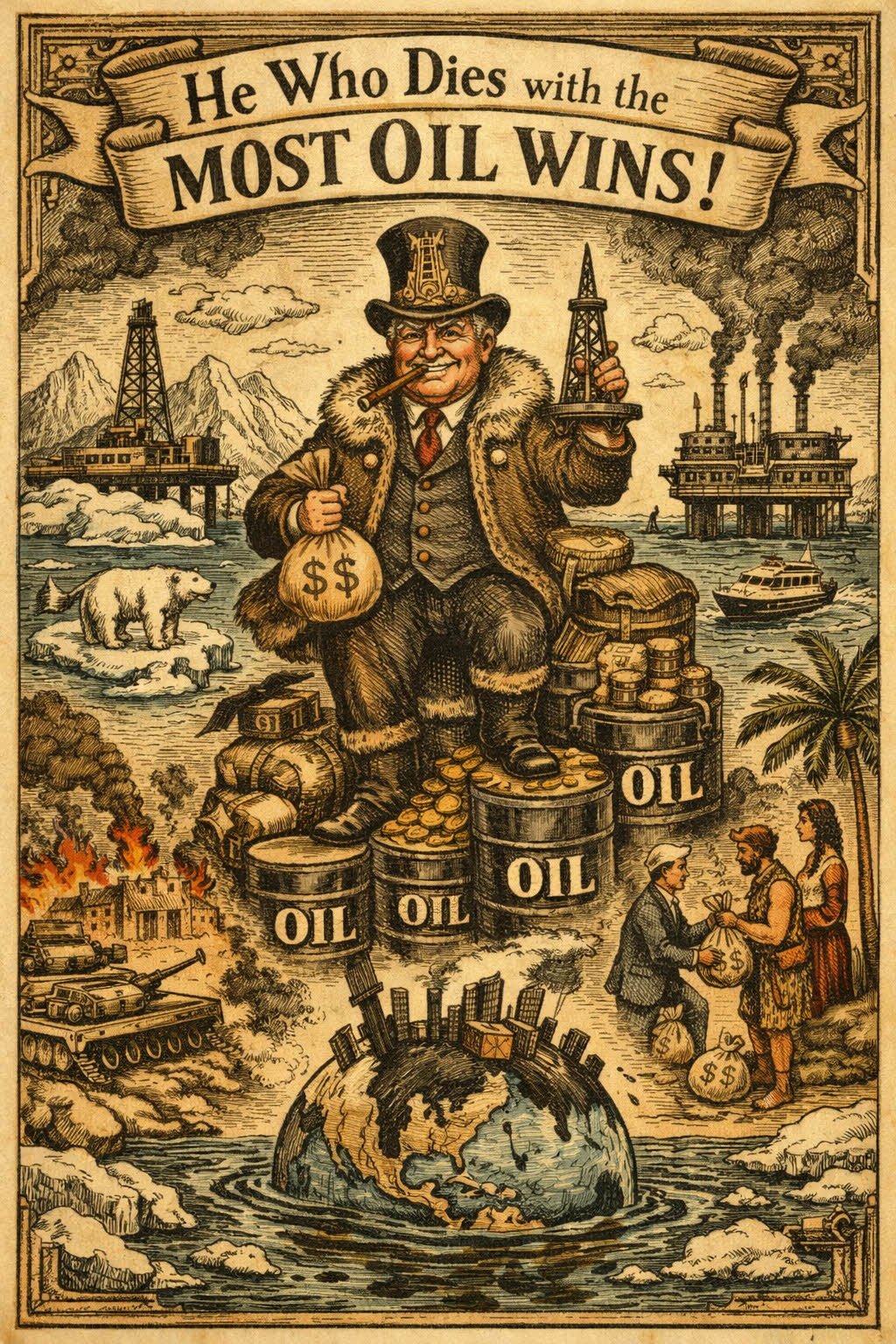
For centuries, humanity labored under the burden of vague goals like “a good life” or “a just society.” Now, thanks to this elegant principle, meaning has been distilled into barrels. Crude, measurable, stackable barrels. You can’t hug virtue, but you can store oil in underground caverns the size of small nations.
Under this philosophy, death itself becomes less tragic and more competitive. Funerals transform into life-performance reviews. Mourners gather not to reflect on love or legacy, but to whisper reverently: Did you hear? He left behind three offshore oil reserves and a modest pipeline network. It was certainly a life well lived.
Children, of course, must be trained early. Why teach them to share when you can teach them to drill? In fact, it brings fond meaning to the phrase “drill baby drill!” Why encourage curiosity in a child, other than to be able to discern geological surveys and determine the best places to drill for oil? This capability will offer far more reliable returns? Forget bedtime stories—tuck them in with reserve estimates. Lullabies should include phrases like “proven,” “recoverable,” and “strategic interest.”
Morality, too, becomes wonderfully streamlined. If an action increases oil holdings, it is good. If it decreases them, it is naïve. Is there a forest in the way? Well, that is regrettable, but forests do not power the yachts of billionaires. Is there an indigenous community raising concerns? Now that’s touching. But have they considered the quarterly earnings call?
Even nature herself must learn the rules. Melting ice caps are no longer warnings; they are opportunities. Melting glaciers kindly reveal previously inaccessible resources, proving once again that the planet, when properly incentivized, is eager to cooperate. Climate change, in this framework, is not a crisis—it’s a treasure hunt with inconvenient weather for some.
The beauty of “He who dies with the most oil wins” is its utter clarity about what doesn’t matter. Clean air? Old-fashioned and sentimental. Drinkable water? Overrated— plastic bottles can be bought. A livable future for descendants? Frankly, that sounds like their problem, not ours. After all, they’ll inherit what truly counts: assets.
Critics argue that this philosophy ignores externalities, ethics, and the small detail of planetary survival. But critics, as we know, rarely own refineries. They deal in abstractions like “limits” and “consequences,” which are notoriously difficult to monetize.
In the end, the phrase succeeds because it accidentally tells the truth. Not about what should matter—but about what too often does. It reveals a worldview where winning is defined by accumulation, where the finish line is death, and where the prize is something you cannot take with you—except, apparently, in spirit and spreadsheets.
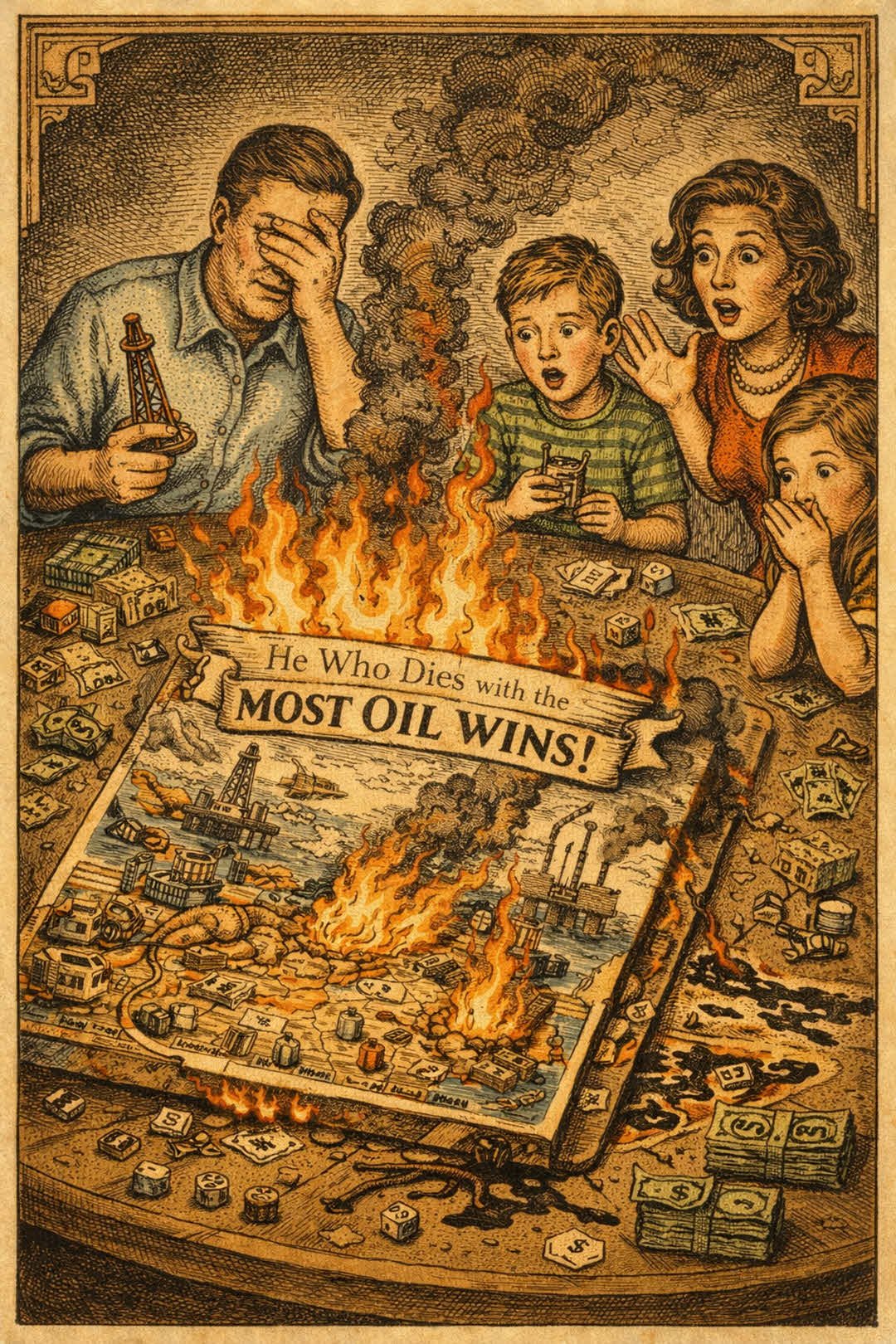
So let us salute the champions of this creed. May their vaults be full, their horizons smoky, and their victory unquestioned—right up until the moment the game board itself quietly catches fire.