Can we not recognize tyranny when we see it? Can we also not forget that when tyranny comes, it is accompanied by hardship and poverty?
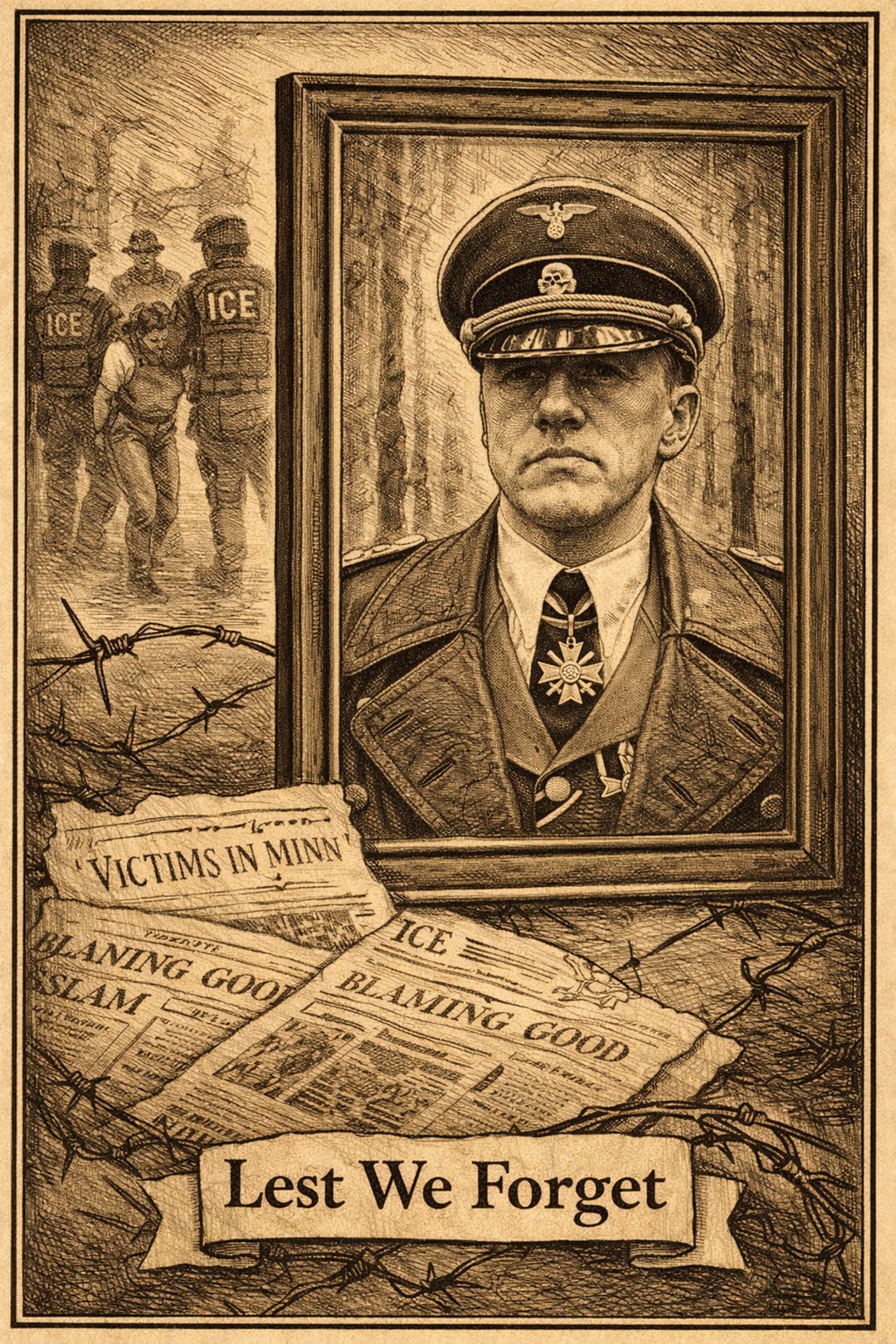
In our country today, we have a most useful class of citizens whose chief talent lies in mistaking delay for wisdom and surrender for strategy. They are easily identified by their soothing language, their furrowed brows, and perhaps even their profound faith that history will forgive them for doing nothing just when we need action the most.
I am referring, of course, to the murder of Renee Nicole Good by an ICE officer, in broad daylight, and recorded from many angles, including by the ICE officer himself.
We are assured that one day the full record will emerge: the emails, the deployment orders, the text messages composed in haste and deleted in panic. This is a comforting belief, and quite safe, since it postpones responsibility to a future conveniently beyond the next election. Museums, curricula, and solemn plaques are promised, as though justice were a retrospective art form best practiced after the damage is complete.
We will, it is said, eventually know that Renee Good was known to be dead before she was publicly defamed by the Trump administration; that violence preceded the narrative, and the narrative preceded the cover-up. This knowledge will arrive late, but with excellent documentation. Future generations will tour the remains of private prisons, nod gravely, and congratulate themselves on being born later.
The perpetrators, we are told, will one day stand alone, stripped of uniforms and pensions, abandoned by family and friends, haunted by memory. It reminds me of the last scene of Inglourious Basterds, when Christoph Waltz surrenders to Brad Pitt. Brad Pitt wants to leave a sign that cannot be removed. Brad Pitt is concerned that this SS Colonel will move to Nantucket Island and remove his SS uniform. Brad Pitt cannot abide by this.
The bad guy survived, but he didn’t get away. Renee Good did not survive.
More instructive than the fate of villains is the conduct of their enablers. Tyranny, after all, is rarely understaffed. It requires committees, appropriations, and a steady supply of people who know better but prefer comfort. Here, the role of the opposition is of particular interest, for they have mastered the art of opposing tyranny in theory while financing it in practice.
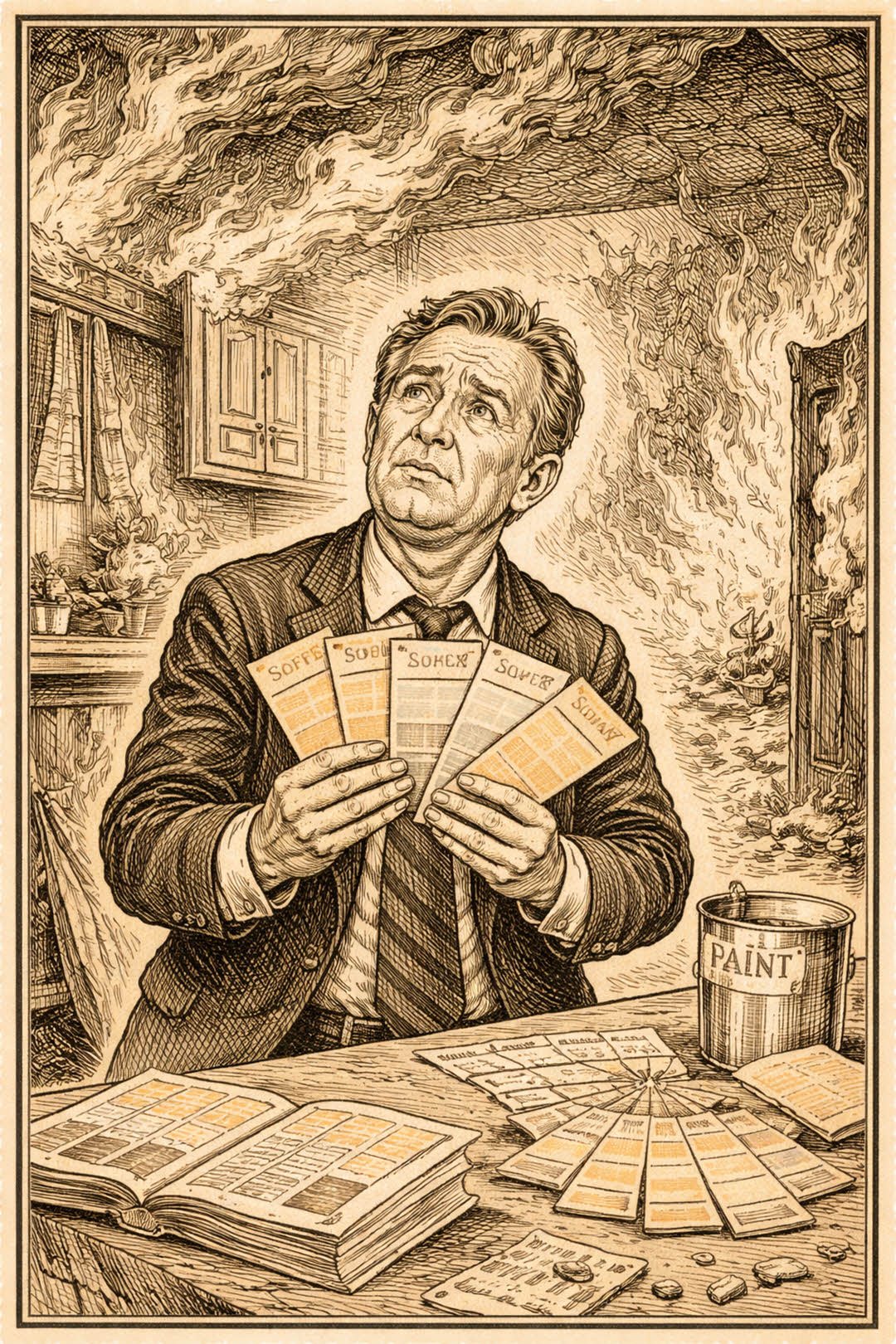
Congressional Democrats, having helped build the very machinery they now tut-tut, explain that they lacked the votes, the unity, the polling, or the courage—often all four. They speak earnestly of process while power consolidates, and of future remedies while present abuses metastasize. Think of the homeowner who deliberates on what color to paint the walls as the house burns.
The leaders of the opposition to this tyranny are fond of procedural language, which has the advantage of meaning nothing while sounding serious. Asked whether funding might be withheld to restrain abuse, they reply that appropriators are “working on it,” which in politics is the verbal equivalent of placing a bookmark in a book one has no intention of finishing. Others explain that they are focused elsewhere, as though tyranny were an optional agenda item competing with tax credits.
It is tempting to blame only the obvious villains, but this would be unfair. Villains, at least, know what they want. Appeasers merely hope the storm will pass if they stand very still.
John F. Kennedy once suggested that public servants be measured by courage, judgment, integrity, and dedication. This test has fallen out of fashion, perhaps because it is too easy to grade.
The tragedy is not that tyranny announces itself—it always does—but that it is met with managerial hesitation and poll-tested silence. The choice, as ever, is simple: to draw a line and hold it, or to explain later why no line was drawn.
History is generous with monuments to regret. It is far stingier with absolution for those who saw clearly, spoke softly, and did nothing at all.
We must recognize tyranny and call it what it is. We must also remember that when tyranny comes, it is also accompanied by hardship and poverty.