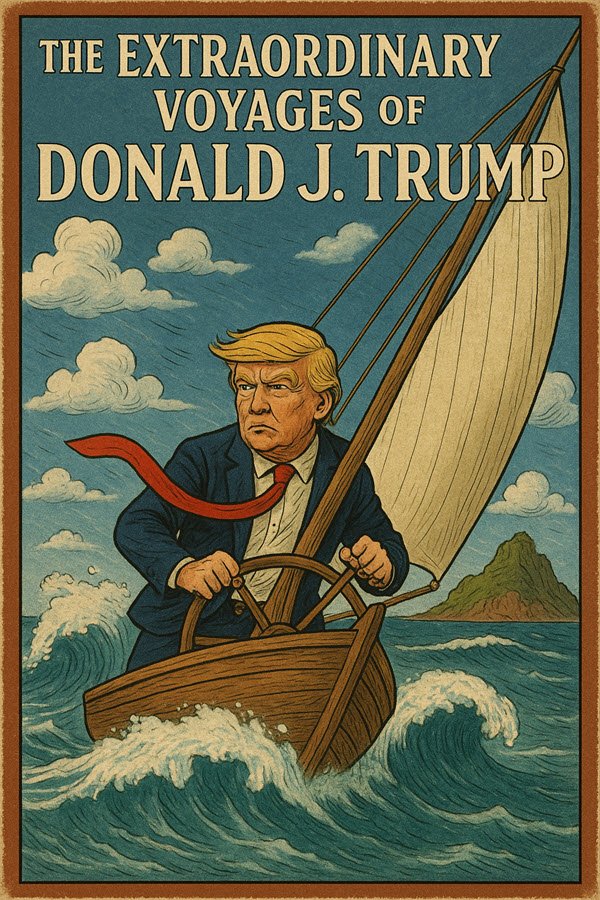
Proximity to Donald the Magnificent Is No Longer Prestige
In ancient fables, there is always a sorcerer who believes the kingdom trembles because of his power, when in fact it trembles because no one has yet dared to laugh. The enchantment holds not by magic, but by obedience. And once a single peasant snickers, the whole illusion collapses like stage smoke.
Such appears to be the present condition of Washington under Donald Trump.
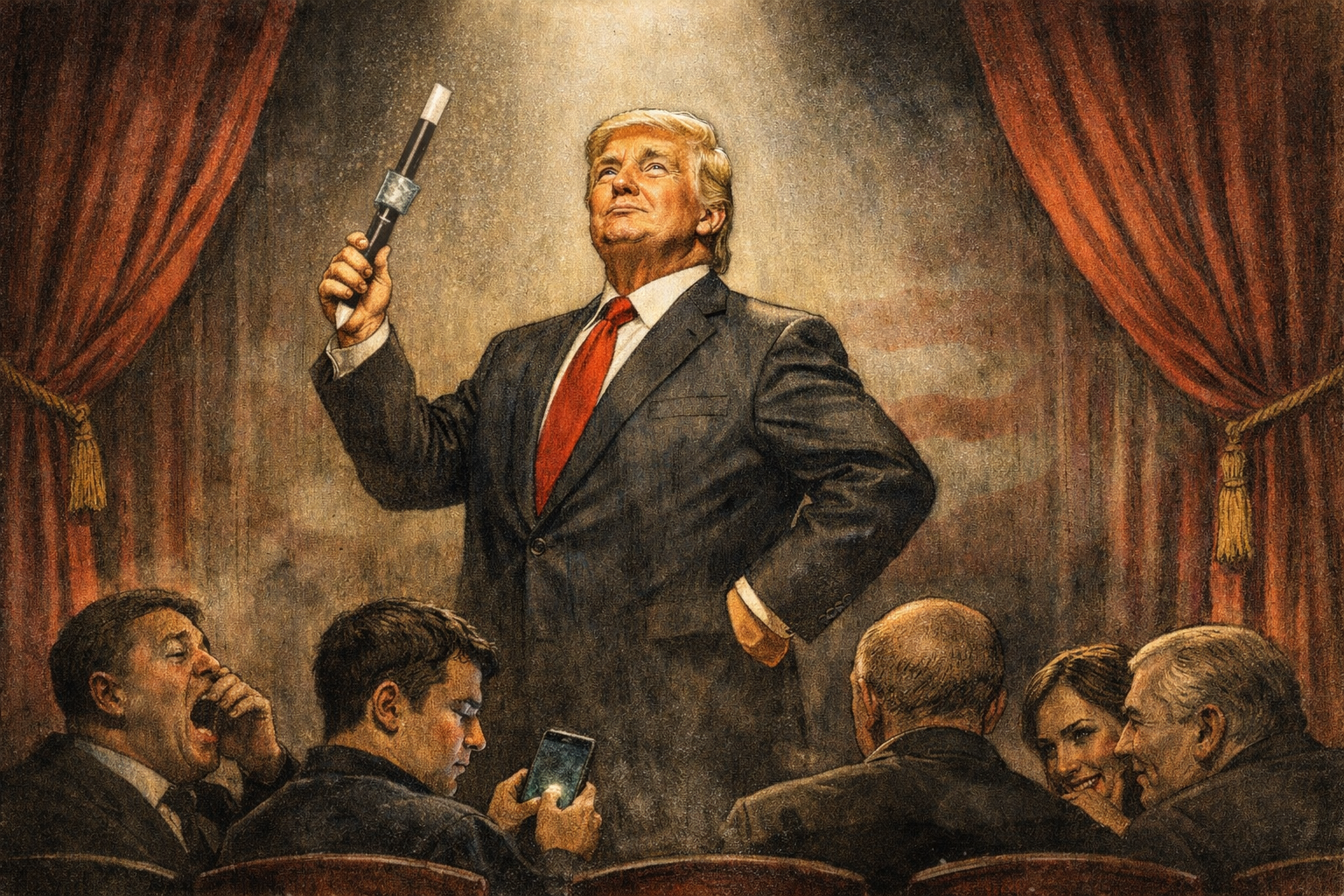
For years, the court of Donald the Magnificent operated on a simple principle: proximity was prestige. To be summoned was to matter. Governors hurried to the capital like minor dukes, hoping for crumbs from the imperial banquet. Foreign leaders polished their accents and rehearsed their smiles, fearful that one misplaced syllable might summon the wrath of the social-media thunderbolt of the MAGA.
But lately, something extraordinary has occurred. The guests have begun declining the invitation.
The White House, once described in quaint civics textbooks as “the people’s house,” has discovered that it is also, apparently, a gated community. Republican governors are admitted to dine beneath the chandeliers; Democratic governors are advised to seek pasta and breadsticks elsewhere. The administration assures us this is discretion, not division. After all, what is bipartisanship but an optional side dish?
Yet what makes this moment so fascinating is not the exclusion. What is remarkable is the response. Democratic governors did not plead for entry. They boycotted. The National Governors Association, that bland plumbing fixture of the republic, quietly withdrew from facilitating the spectacle. Even Republican governors began murmuring about “unity,” as though unity were a misplaced umbrella rather than a constitutional principle.
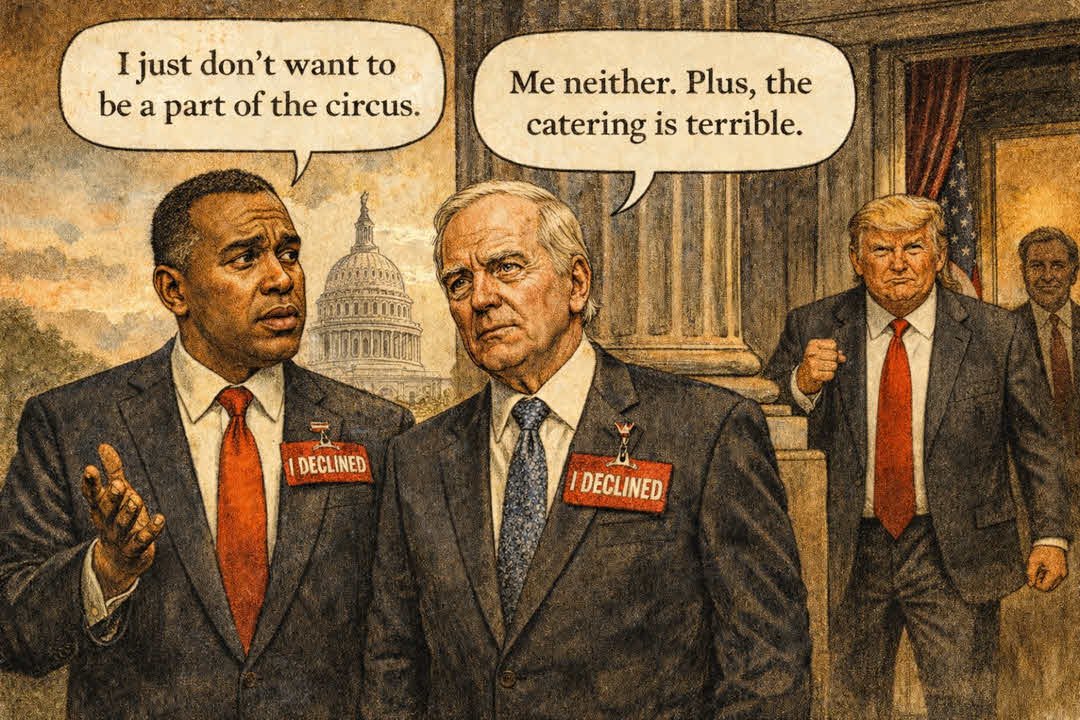
Across the Atlantic, the change is even more pronounced. Once upon a time, no European leader would dare miss a White House photo-op. A handshake in Washington was worth a thousand campaign posters. But now, the First Minister of Northern Ireland has declined to attend St. Patrick’s festivities, declaring that genocide in Gaza is not improved by shamrocks. Imagine the audacity: to treat moral conviction as more valuable than proximity to power. Imagine.
This is the fracture in the spell.
For years, Trump’s authority rested on intimidation. His genius—if we may use the word in its theatrical sense—was convincing the world that to defy him was to vanish. He operated not as a president but as a crass, temperamental bully. If we were to liken Trump to a gravitational field, we would see that critics orbited cautiously. Allies circled reflexively. Even enemies measured their insults in teaspoons.
But the gravitational pull weakens when enough bodies drift away.
The governors who once trembled now skip dinner. European leaders who once tiptoed now speak plainly. Members of Congress debate whether attendance dignifies dysfunction. The fear of exclusion, once the whip that disciplined behavior, has transformed into a ribbon worn proudly by those who refuse to attend.
The White House may still send invitations, and the flags may still wave obligingly in the background. But the animatronic rituals of democracy cannot substitute for the real thing. A banquet without legitimacy is merely catering. A ceremony without shared ground is only theater.
The sorcerer may shout, but the crowd has noticed that his wand is made of cardboard.
And this, perhaps, is the most dangerous moment for any would-be monarch: not when he is opposed, but when he is ignored.