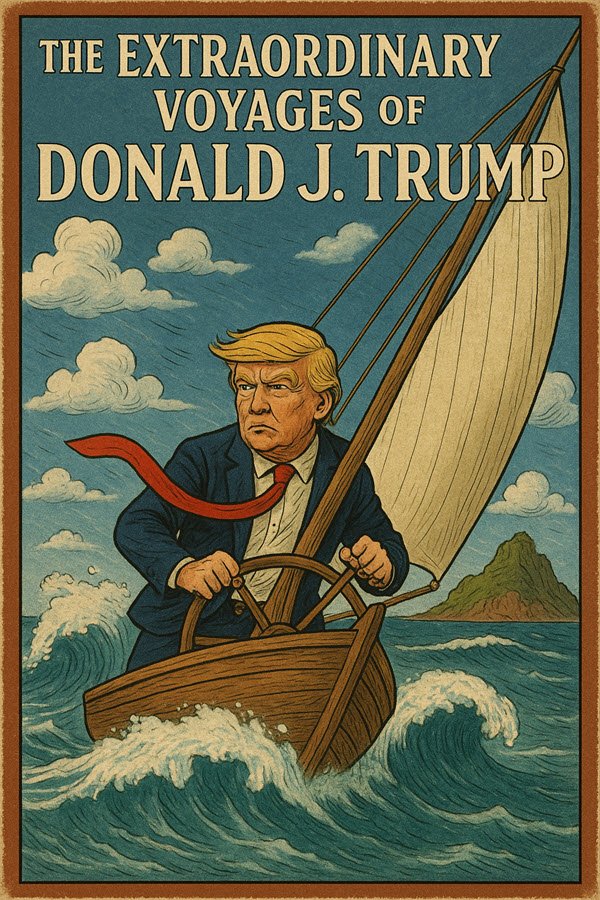
Donald Trump and George Orwell
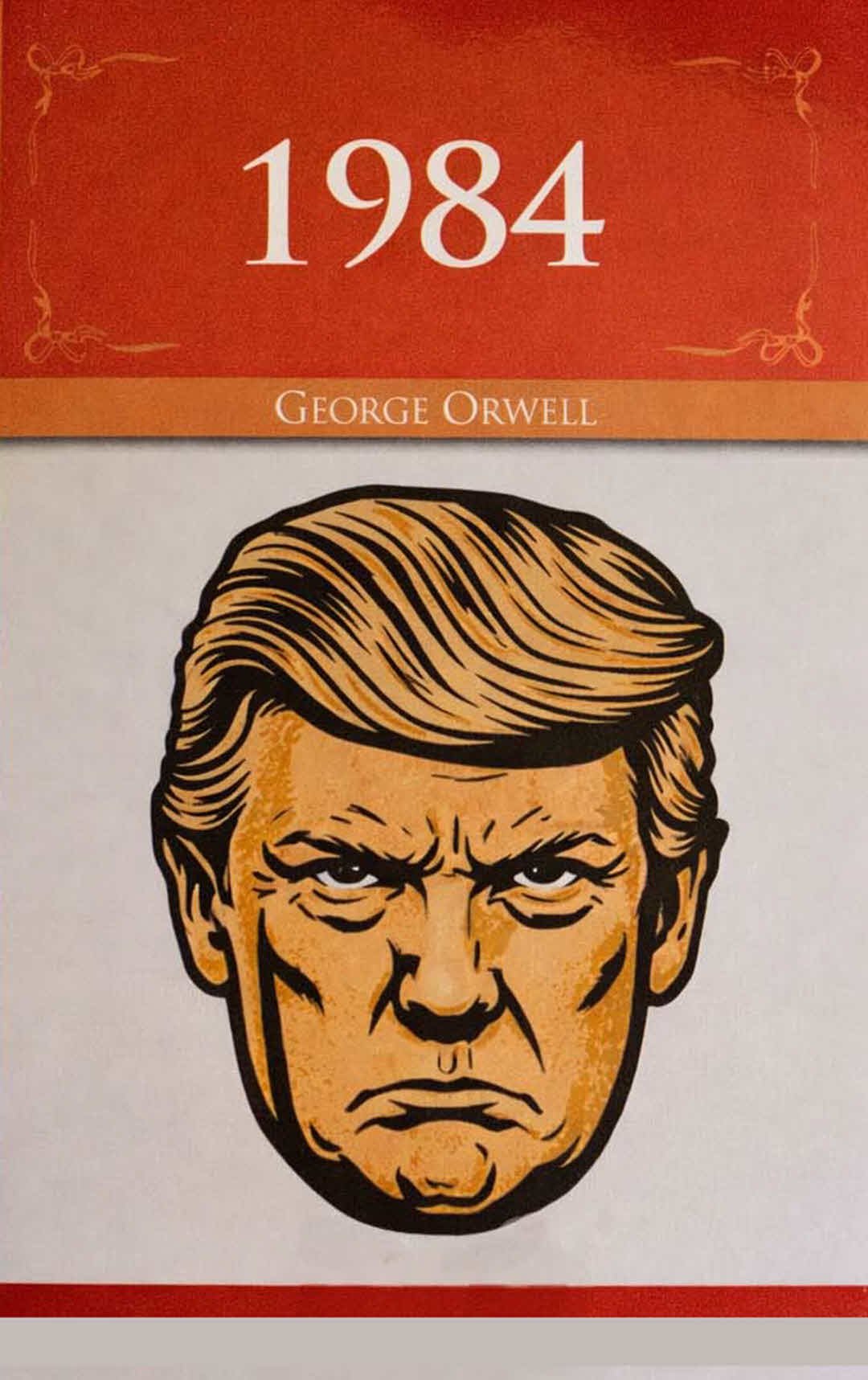
When Donald Trump took office, sales of 1984 rose by 9,500 percent. This was widely interpreted as a resurgence of interest in literature, which was touching and quaint but incorrect. What actually occurred was mass panic by people shopping for a user’s manual.
George Orwell, inconveniently deceased 76 years ago today (January 21), has since been dragged back into public life as a kind of literary smoke alarm for our society. He did not predict the future; we are told sternly that he merely warned us about it. Unfortunately, warnings have a curious habit of turning into prophecies when they are ignored, mocked, or rebranded as “fake news.”
An Example, January 6th Pardons
After the January 6 attack on the U.S. Capitol, the White House reframed the pardons not as absolution for an assault on democratic institutions, but as a correction of supposed injustice. Rather than focusing on the violence, threats to lawmakers, or disruption of the constitutional process, officials emphasized claims that participants were “overcharged,” “politically targeted,” or victims of a biased justice system.
The language shifted from insurrection to protest, from attack to disorder, and from criminal accountability to national healing. Individuals convicted of serious offenses were recast as misguided patriots, nonviolent demonstrators, or symbols of government overreach. Responsibility for January 6 itself was blurred by redirecting attention to unrelated grievances, selective footage, and claims of unequal treatment compared to other protests.
By centering the narrative on grievance rather than conduct, the White House transformed the pardons into an act of defiance against institutions, rather than an endorsement of the events that led to them.
The burden of proof regarding the truthfulness of a claim lies with the one who makes the claim, in this case the administration of Donald Trump. If this burden is not met, then the claim is unfounded, and its opponents need not argue further to dismiss it.
Orwell believed that “who controls the present controls the past.” This was not meant as a helpful suggestion, yet it has been adopted enthusiastically by modern governments, which treat history less as a record and more as a whiteboard. Facts are erased, redrawn, and then blamed for their own disappearance. Memory becomes optional. Loyalty does not.
We now invoke “Orwellian” whenever civil liberties are throttled, truth is kneecapped, or language is forced into doing pushups for power. But as Christopher Hitchens noted, Orwell’s genius was not despair; it was resistance. His writing insists—rudely—that human beings are capable of noticing lies even when those lies arrive with flags, slogans, and cheerful spokespeople.
Orwell’s style was famously plain. He wanted prose to be like a windowpane—transparent, unornamented, and difficult to hide behind. This is why he is so dangerous. Dictators prefer curtains.
In 1984, Winston Smith declares that freedom begins with the right to say two plus two equals four. This is often misread as a math lesson. It is not. It is a statement about permission. You may believe whatever arithmetic you like, but the moment you are punished for stating the obvious, reality itself has been nationalized.
Orwell understood something we pretend not to: truth does not belong to any party. It does not wear a uniform. It does not need applause. This is why it is treated as subversive. As he wrote, “In a time of deceit, telling the truth is a revolutionary act.” Revolutions, of course, are frowned upon when they involve facts instead of weapons.
Two new books remind us that Orwell did not emerge from nowhere. He was shaped by war, propaganda, hypocrisy, and the special madness of watching reasonable people justify unreasonable things. He did not change history, but he explained it clearly enough that history could no longer pretend it was misunderstood.
“I hesitate to say 1984 is more relevant than ever,” one biographer writes, “but it’s a damn sight more relevant than it should be.” This is the literary equivalent of saying the house is not technically on fire, but the smoke is coming from inside the living room or perhaps the Oval Office.
So here we are, clutching Orwell again like a passport, wondering how a man armed with nothing but a battered typewriter managed to describe us so precisely. The answer is simple and uncomfortable: he paid attention.
And he assumed we would too.