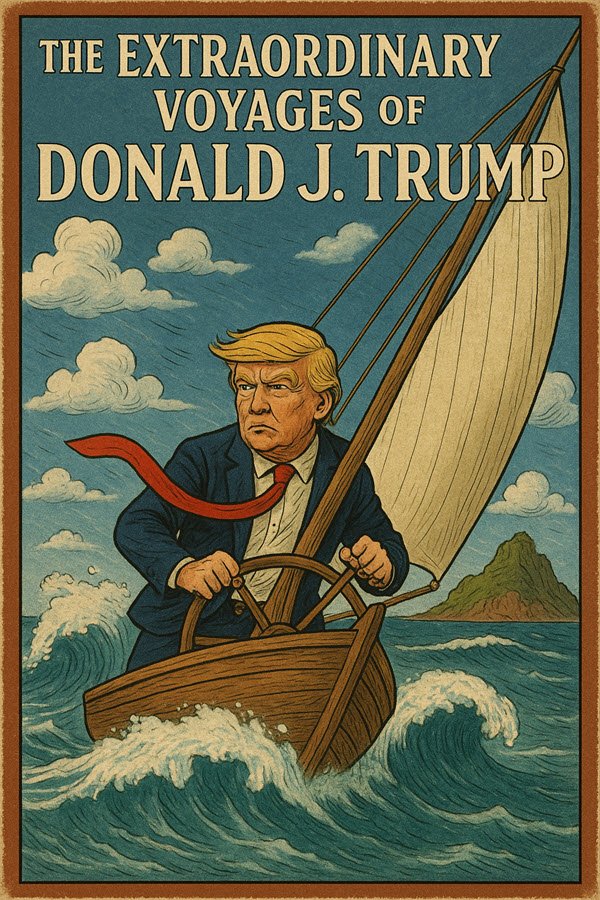
Commendable frankness, that the United States must acquire Greenland.
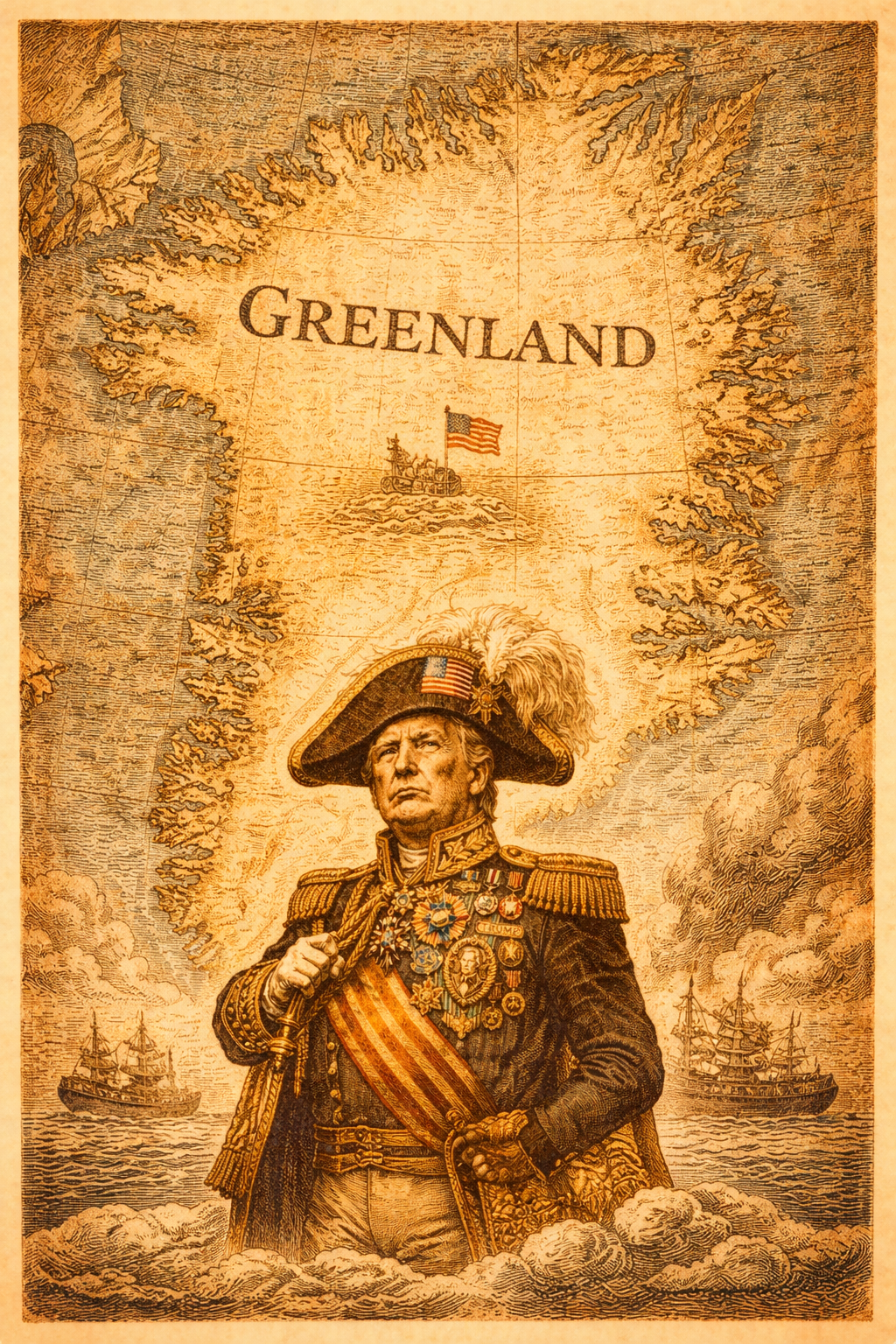
It has lately been announced, with commendable frankness, that the United States must acquire Greenland. This necessity arises not from desire, ambition, or appetite. Such vulgar motives are certainly beneath serious statesmen. Rather, the motive is simple. It stems from the fear that someone else might take it first. The President has assured us that this is not conquest, but prevention; not seizure, but foresight; not imperialism, but neighborly caution on a continental scale.
Simple Reasoning
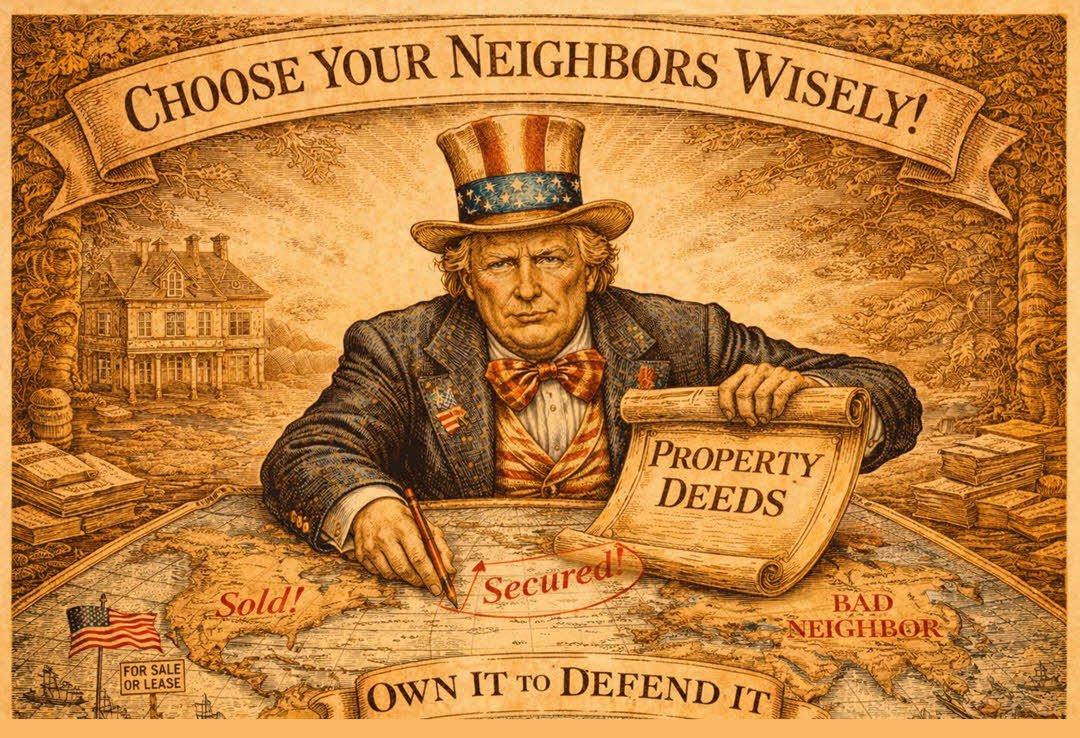
The reasoning is elegantly simple. If the United States does not take Greenland, Russia or China might. And if Russia or China were to take Greenland, they would become neighbors. Neighbors, it is implied, are dangerous when not chosen personally. Thus the only prudent course is to arrive first, preferably with flags, contracts, and if required, ships.
This doctrine, having proven effective, has recently been tested elsewhere. Venezuela, we are told, required similar attention. There, too, the danger was not what was happening, but what might happen if the United States refrained from acting. The country was therefore invaded, its leader removed for safekeeping, and its oil placed under responsible supervision—namely, supervision by those best equipped to manage it.
That several American oil executives happened to be present for the announcement should not trouble the reader. It is well known that national security is best discussed among those with pipelines.
A Broader Overarching Principle
The President has helpfully clarified that these actions are not limited to Venezuela. They are part of a broader principle: wherever Russia or China might conceivably go, the United States must arrive first. This saves everyone the inconvenience of negotiation later. Sovereignty, after all, is a fragile thing when left unattended.
Greenland, it turns out, is particularly vulnerable. Though inhabited by some fifty-six thousand people and administered by Denmark—a NATO ally—the island has made the error of existing in a useful location. It sits near the Arctic, contains minerals, and may contain oil. Such attributes invite concern. One cannot expect a territory so rich and well placed to remain unclaimed indefinitely, especially by those already living there.
National Security (of course)
The President has therefore explained that Greenland is a matter of national security. This phrase, like all good phrases, requires no elaboration. It covers geography, resources, alliances, and ownership with equal efficiency. That Denmark might object is unfortunate, but the President has reassured us that friendship remains intact. Friendship, however, does not preclude acquisition. One may admire a friend greatly and still require their property.
Indeed, the President has offered a helpful analogy from his previous profession. Property, he explains, must be owned to be defended. Leases are insufficient. Ownership is security. Applied broadly, this suggests a refreshing clarity in foreign policy: nations are real estate, alliances are contracts, and history is merely a paperwork dispute that has gone on too long.
This perspective also resolves certain ethical inconveniences. If a country is merely a property awaiting proper management, then invasion becomes property renovation. Military force becomes a closing cost. Resistance becomes a zoning issue.
Kindness Remains An Option
The President has emphasized that he would prefer to acquire Greenland “nicely,” though he has also noted that there is another way. It is comforting to know that kindness remains an option.
What About Our Friends in Ukraine?
Notably absent from these discussions was any mention of Ukraine, despite recent events involving missiles and borders. The President did, however, find time to reassure the public that his relationship with the Russian president remains excellent.
This is no small comfort. One may forgive many things in geopolitics, but it is always reassuring when personal rapport survives.
In sum, the doctrine now before us is admirably coherent. The United States must take what others might take, occupy what others might occupy, and control what others might desire. This is not aggression; it is anticipation. Not empire; insurance.
And if, in the process, smaller nations, allies, or inconvenient populations must be reminded who holds the deed, this is regrettable—but preferable to having the wrong neighbor.