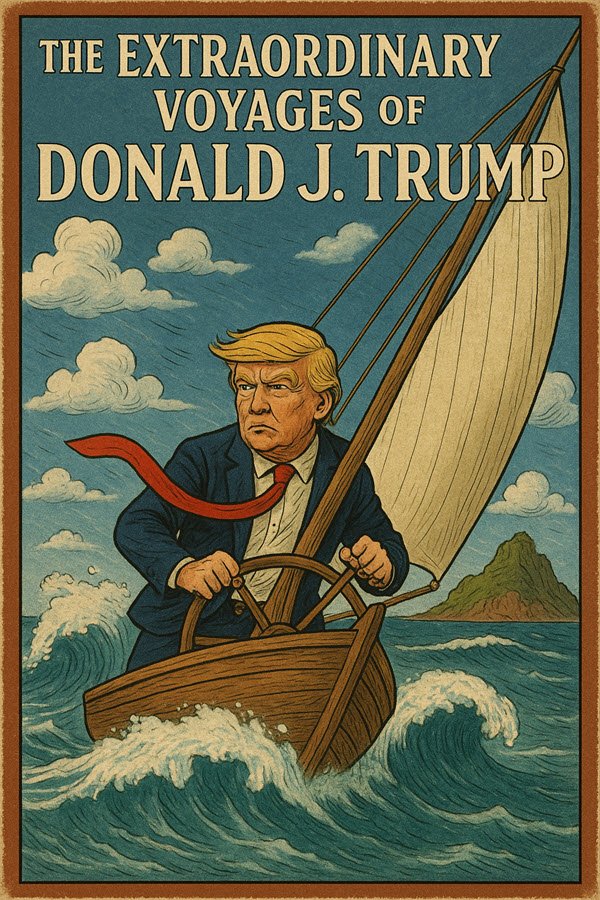
A Modest Proposal for Ignoring Them
It is a marvel of modern governance that the most dangerous thing an American can do is hold a phone the wrong way. In Minneapolis, we have learned that filming federal agents, assisting a fallen stranger, and asking “Are you okay?” is now a prelude to death—followed swiftly by a press release explaining why you deserved it.
The Trump administration would prefer we not dwell on such untidy details. Instead, we are invited to admire a new civic virtue: obedience to narrative. The official Trump administration account arrives first, brisk and confident, like a hotel towel folded into the shape of a swan. Video arrives later, ungainly and rude, flapping its wings, contradicting the swan. The proper response, we are told, is to trust the swan. Pay no attention to the video.
And so we are treated to a bold new epistemology or theory of knowledge. Evidence is suspect. Eyewitnesses are unreliable. Judges who demand preservation of facts are meddlesome romantics. Cameras lie; statements do not. If the Constitution complains, it is reassured with a memo—self-issued, confidential, and too illegal to circulate widely —that is the gold standard of Donald Trump’s executive innovation.
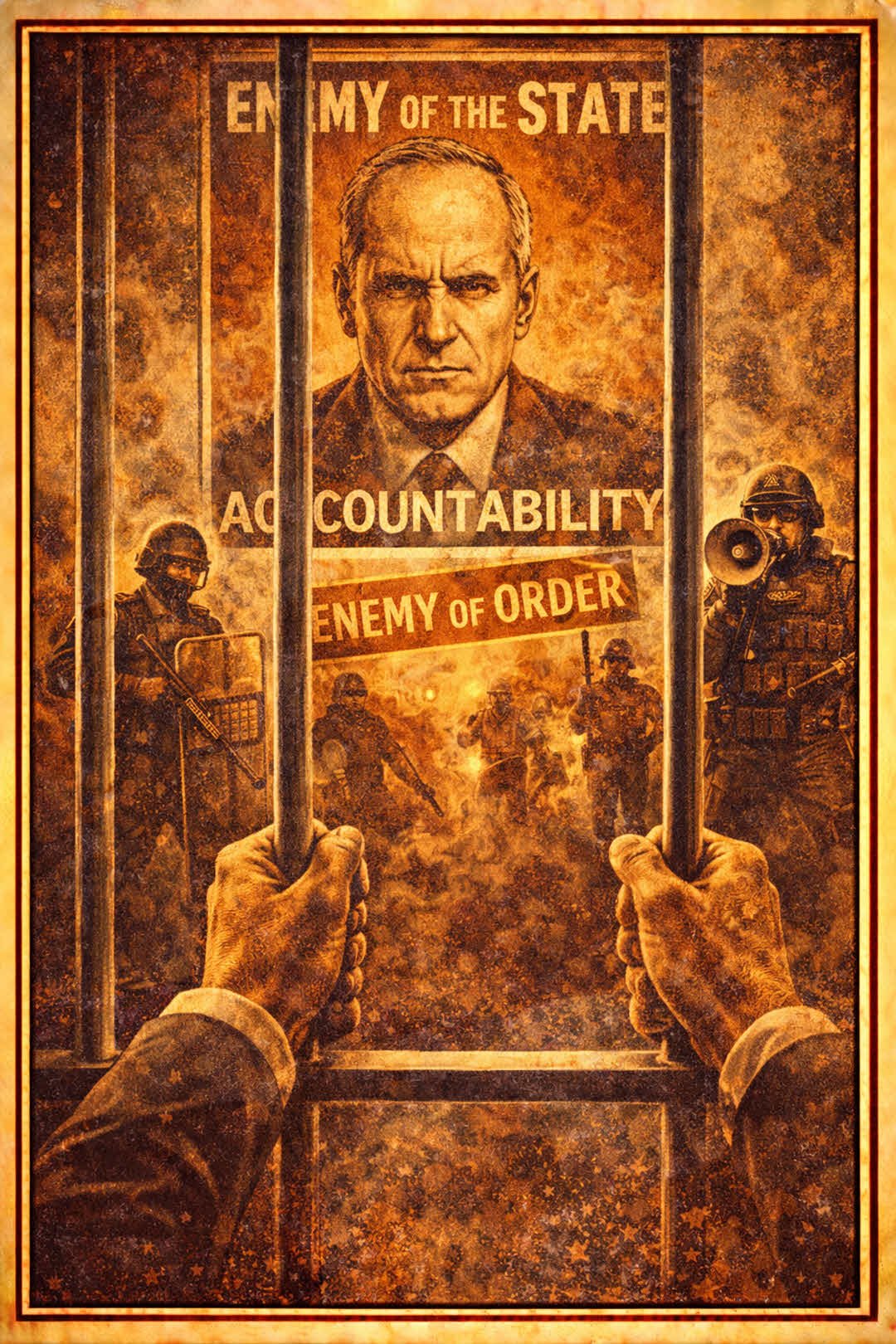
We are also instructed to marvel at efficiency. Civil violations, once the legal equivalent of parking tickets, are now enforced with the choreography of a siege. Speed is celebrated. Planning is quaint. Discretion is for cowards. When things go wrong, as they inevitably do when force becomes the point, the solution is not restraint but rebranding. A death is a “medical incident.” A witness is a “threat.” Accountability is a rumor started by enemies of order…enemies of the state.
It would be unfair to say this is unpopular. The country is split—until it sees. Abstract enforcement polls well. Masked agents in cities do not. Bodies in a morgue do not. Raids without warrants do not. There is a difference, Americans seem to understand, between law and lawlessness wearing a badge. It is an old distinction, but still serviceable.
The cleverness lies in the sequencing. First, chill the press—preferably with a warrant-shaped fig leaf. Next, bypass judges—preferably with paperwork signed by oneself. Then normalize force—preferably by quotas. Finally, manage the aftermath—preferably by removing evidence before it can testify. It is a full cycle, elegant in its simplicity, exhausting in its consequences.
The greatest insult is not violence; it is the instruction to stop believing our own eyes. We are told not to believe ourselves. We are told that a holstered gun is intended to massacre large numbers of ICE agents, that a phone is provocation, and that presence is guilt. Yesterday’s open-carry patriot becomes today’s posthumous criminal, depending entirely on who is holding the megaphone. Consistency is unnecessary when loyalty suffices.
And yet, something inconvenient persists. Judges keep saying no. Insiders keep talking. Polls keep shifting. Video keeps existing. Even unlikely allies urge restraint, as if embarrassed by the haste to canonize before facts clear their throats.
Minneapolis did not seek this honor. It received it because spectacle was chosen over law. The cameras did not create the crisis; they ruined the lie. Which is why the plea now is so urgent, so shrill, so familiar: do not believe your own eyes.
A modest proposal, then: let us comply. Let us avert our gaze, discard our memories, and replace our senses with statements. Or—failing that—let us do the truly radical thing. Let us watch. Let us document. Let us remember.
History has a long memory, even when power insists otherwise.