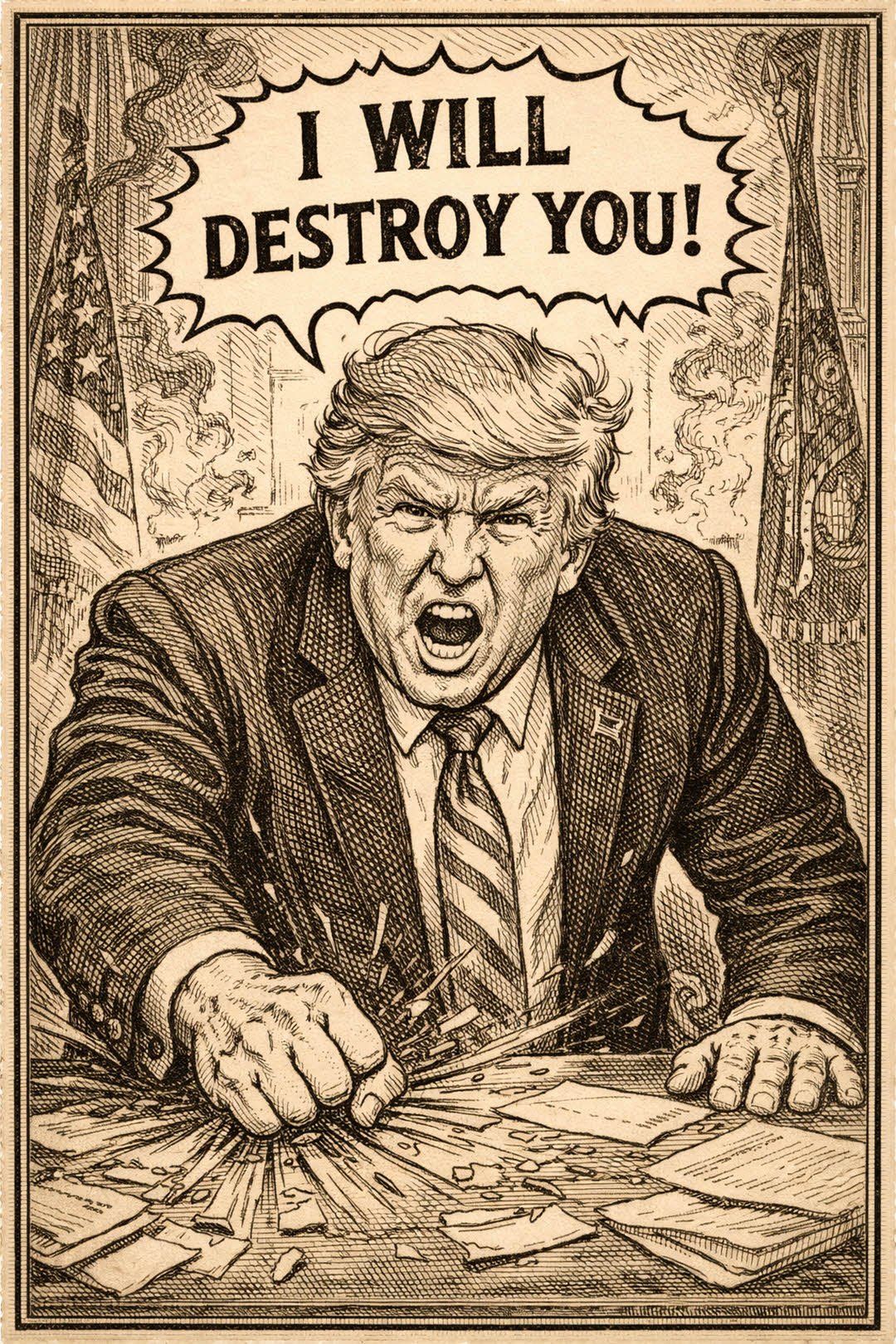
More Evidence of DOJ Weaponization!
It has long been understood that in a well-ordered republic, competence must be carefully supervised, lest it develop dangerous ideas about independence. Recent events concerning Jerome Powell, chair of the Federal Reserve, provide a useful illustration of how this supervision ought to function when Donald Trump feels insufficiently obeyed.
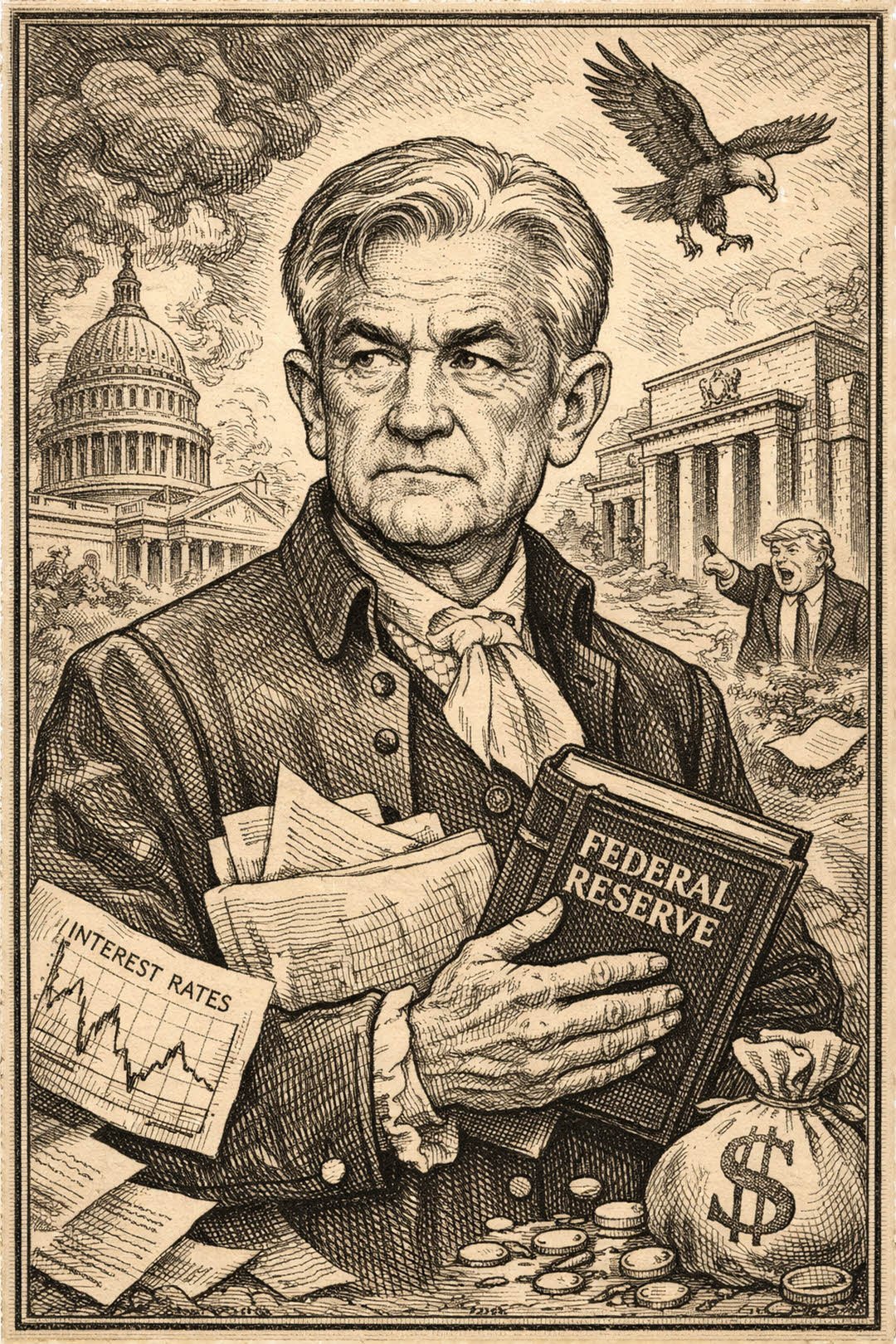
The alleged crime is charming in its vagueness. It is not about testimony, renovations, or accounting—those being mere decorative details, useful only as wrapping paper. The true offense, as Powell himself noted with disarming clarity, is that the Federal Reserve insisted on setting interest rates according to evidence, data, and economic reality rather than the emotional requirements of Donald Trump.
This, in certain circles, is known as insubordination.
Naturally, the Department of Justice, now liberated from the burden of credibility, has stepped forward to investigate. Not because anyone believes a crime occurred—such naïveté would be unbecoming—but because intimidation works best, at this level, when dressed in legal clothing. The message is not subtle: expertise will be tolerated only so long as it flatters power and Donald Trump’s ego.
This is not, we are told, merely about the Federal Reserve. And indeed it is not. It is about the broader principle that dissent, whether from economists, mayors, journalists, or legal observers sitting quietly in cars, must be discouraged with vigor. The fate of Jerome Powell and the fate of Renee Nicole Good differ only in method, not intent. One is threatened with prosecution; the other was met with bullets. Both serve the same pedagogical purpose, and Donald Trump and his minions stress that we all must learn this lesson.
Some readers may feel discomfort at this comparison. They should not. The modern state prefers efficiency. Not every dissenter can be shot, after all; some must be handled administratively.
We are reminded, by well-meaning commentators, that central bank independence exists for a reason. Politicians enjoy low interest rates the way children enjoy sugar: immediately, excessively, and without regard for consequences. History offers many examples—America after 1972 and Turkey under Erdoğan—of what happens when monetary policy is reduced to campaign strategy. Inflation blooms, currencies wilt, and eventually even loyal bankers are forced to raise rates to punishing levels. The citizens suffer!
This is why technocrats were invented: to say “no” politely, repeatedly, and with charts, data, and evidence. That Powell did exactly this is what makes his behavior intolerable to Donald Trump.
Former Fed officials have warned that weaponizing the justice system against monetary authorities is the hallmark of “emerging markets with weak institutions.” This is diplomatic language. Translated into plain English, it means the leaders of emerging countries believe the state exists to avenge their feelings. Venezuela is a popular example, though the list is regrettably long.
It is therefore fitting that the President has recently taken to declaring himself the acting president of Venezuela, a role he does not hold but clearly admires. One might say he is not invading Venezuela so much as importing it.
The irony is that the attack on the Fed is likely to backfire economically. Markets tend to notice when institutions are bullied. Long-term interest rates rise. Inflation expectations harden. The very outcomes the President desires drift further out of reach.
But this misses the point. Policy outcomes are secondary. Punishment is the objective. Powell’s true failure was not economic; it was personal. He did his job instead of kneeling down to Donald Trump.
In such a system, integrity is not a virtue but a provocation. And so the lesson is delivered clearly to all who might be tempted to think independently: if you cross Donald Trump, you are in trouble. Not because you are wrong—but because you stand for what is right.