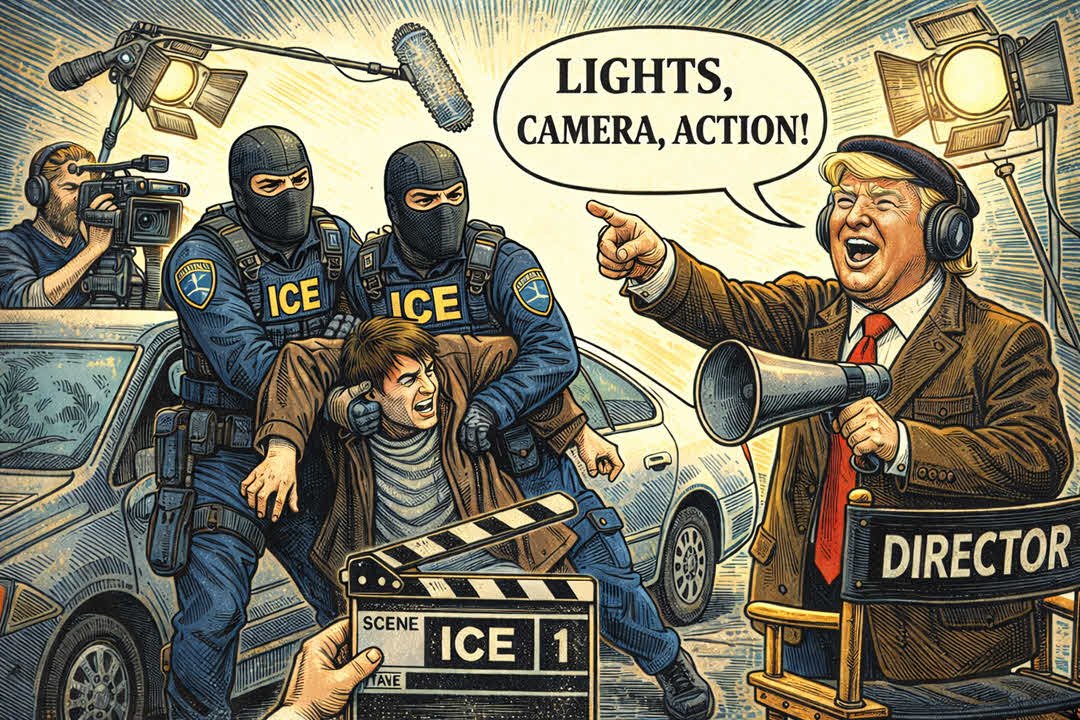
Lights…Camera…Action!
It has recently come to light that the President’s team, after a nervous glance at private polling, has discovered an alarming problem with its immigration policy. The problem readers will be relieved to learn is not violence, legality, constitutionality, or even the moral cost of turning cities into chaos with numerous violent raids by ICE.
The problem, dear reader, is that people are seeing it.
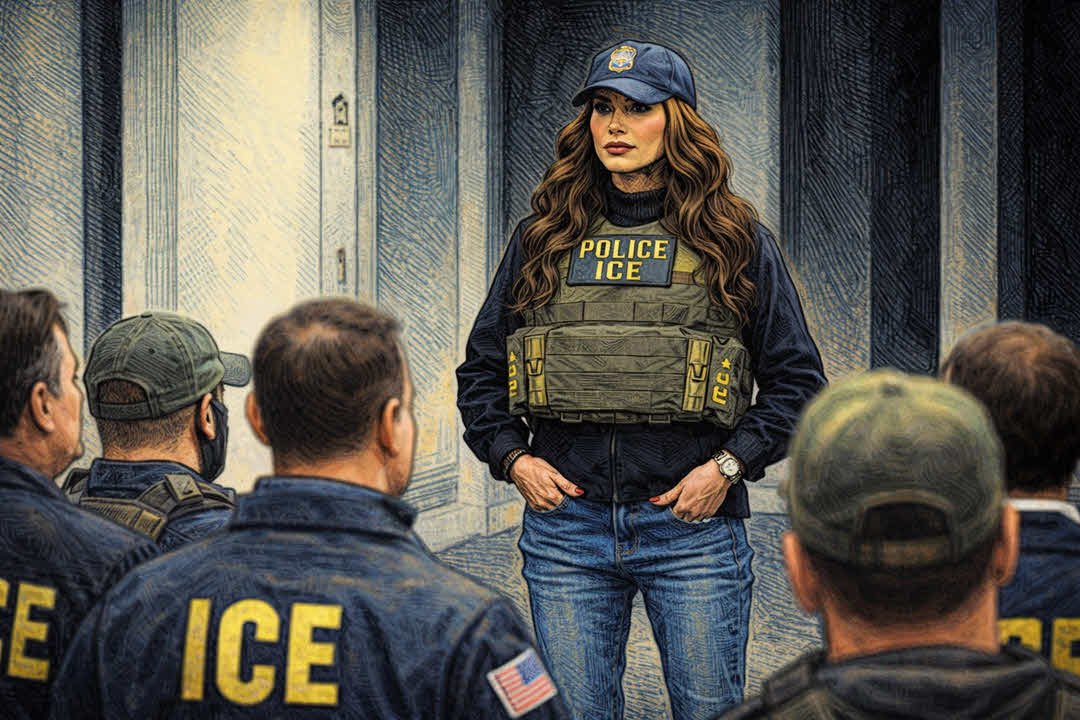
An ICE Photo Shoot with Perfect Lighting and Camera Angles – ICE Barbie
This revelation has caused what aides delicately describe as a need for “recalibration.” Recalibration, in this context, does not mean changing what is done. It means changing how it looks while continuing to do it with even more enthusiasm.
According to those close to the President’s inner thoughts, he is still entirely committed to deportations and, preferably, mass deportations. However, Donald Trump has suddenly developed an aesthetic sensitivity. He does not object to masked agents, militarized tactics, or people being dragged from their cars. What he objects to are the camera angles and the lighting.
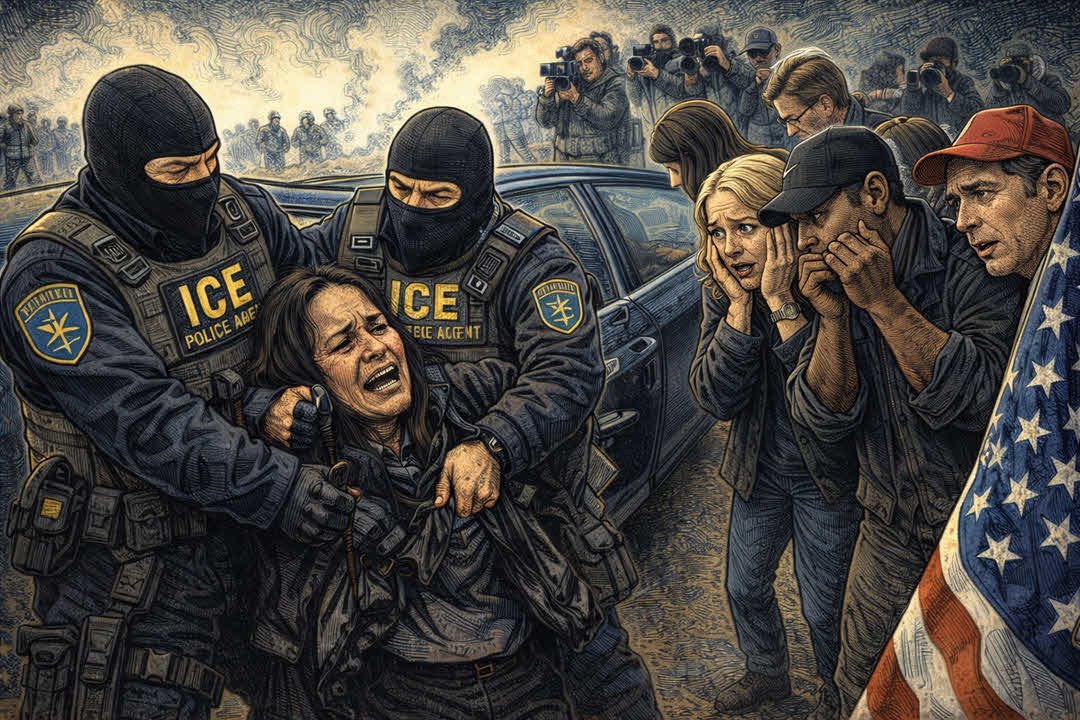
As one adviser helpfully clarified, “He’s not concerned about the policy. He wants deportations. What he doesn’t want is what people are seeing.” This is an important distinction. Policy is substance. Optics can foul everything up. The President is not disturbed by the act; he is disturbed by the review, by the American public, that the acts are receiving.
Polling, that cruel mirror, suggests that independents and undecided voters have begun to suspect that deportations may not be targeting the cartoon villains promised during the campaign. Some even believe law-abiding people are being swept up. This misunderstanding must be corrected—not by changing the reality, but by explaining it louder and preferably on friendlier networks and repeating it often.
ICE, meanwhile, has experienced what Washington calls a “reputational hit,” which is a polite way of saying that people have noticed armed men in masks snatching their neighbors off the street and that these people have found the experience unsettling. Even longtime allies have begun to use unapproved historical comparisons, asking whether the nation has truly arrived at the “Where are your papers?” phase of its journey.
This is inconvenient. The administration perhaps (I say that ironically) would like to talk about cost-of-living issues. However, the daily spectacle of raids, protests, and fatal shootings keeps interrupting. One cannot pivot to grocery prices when the news cycle is dominated by armored vehicles and masked men in military fatigues confronting our citizens.
Naturally, blame has been efficiently assigned. According to official messaging, the problem is not federal force, but local resistance. The chaos, we are told, only happens in “blue sanctuary cities,” where insufficient enthusiasm for federal authority has forced ICE to behave this way. If cities would simply cooperate, no one would have to be traumatized so publicly.
Despite murmurs of recalibration, escalation remains the plan. More agents are being sent. Lawsuits are dismissed as noise. The Insurrection Act is floated cavalierly and casually. Behind it all stand the architects of the policy, satisfied that firmness will eventually poll better than fear with the American people.
The administration assures us that the President is still seen as a strong leader who keeps Americans safe. The evidence offered is nothing but repetition.
Thus, we arrive at the governing philosophy in full: do not stop doing the thing. Do it harder, but with better lighting and camera angles. If the public recoils, dim the lights or perhaps even fade to black. If allies object, suggest that their best move if to change the channel. If voters waver, remind them that what they are seeing is not brutality, but rather a necessity to keep them safe.
In modern politics, how things look on TV or social media is all that matters. If it looks bad, then this is the only unforgivable sin.