Although The Administration Would Very Much Like Us To
There comes a moment in every republic when memory itself becomes a civic duty. We have reached that moment. The American public, generous to a fault, has a remarkable talent for amnesia—especially when exhaustion sets in, and the news cycle moves on. This is unfortunate because certain facts, once forgotten, have a nasty habit of reappearing in more dangerous forms.
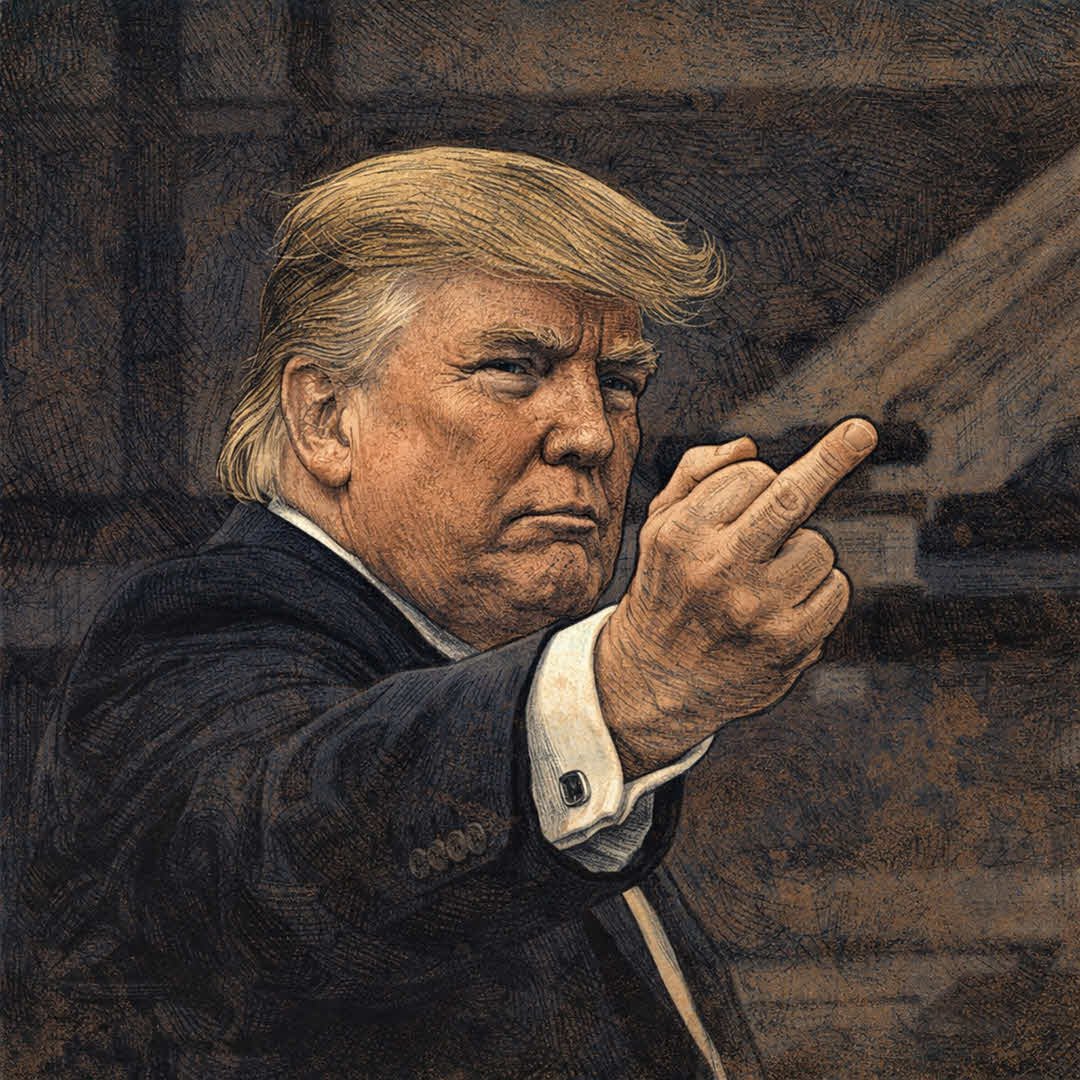
Consider the recent spectacle involving a Ford employee, TJ Sabula, suspended for calling the President what the President himself has spent years proving he deserves to be associated with: the stench of the Epstein files. The White House’s response was neither a denial, documentation, nor even dignified outrage. It was a profanity and a raised middle finger, the traditional gesture of statesmen who feel the story is slipping through their hands.
This is why we cannot forget.
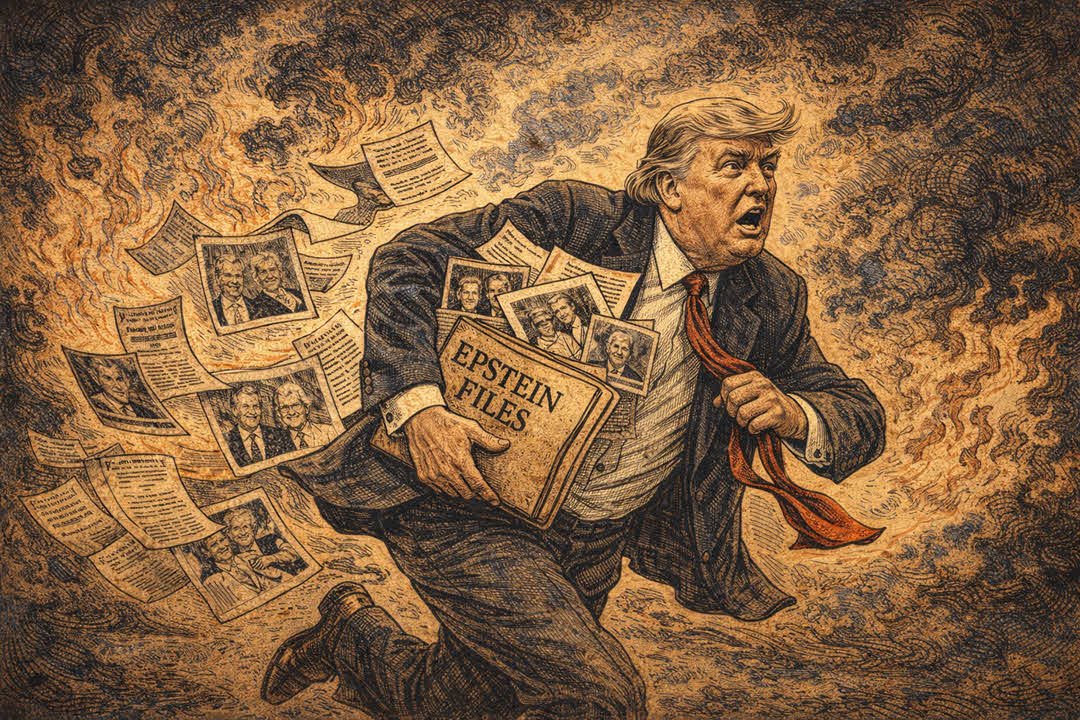
The administration would very much like us to. Forgetting is essential to its continued operation. Forget the friendships and birthday cards. Forget the photos. Forget the flights. Forget the quotes. Forget the convenient silences. Forget the pattern. Forget the victims. Forget the way every uncomfortable question is met not with facts but with volume, insult, and theatrical offense.
We are told that bringing this up is “disrespectful,” “divisive,” or “in poor taste.” This is rich, coming from a president whose idea of leadership involves flipping off critics like a heckler in a parking lot. Taste, it seems, is something demanded of everyone except Donald Trump.
The Epstein files are not a distraction. They are the thing the administration is trying to escape from. The fury, the obscenity, the frantic need to redirect attention—these are not signs of confidence. They are the tells of a man who understands, on some level, that memory is dangerous. Documents do not forget. Photographs do not forget. Patterns do not forget. Only people do.
And encouraging everyone to forget is the regime’s preferred policy.
We are encouraged to focus on the latest outrage instead: an investigation here, a tweet there, a manufactured culture war to keep everyone busy while the rot goes politely unexamined. The goal is exhaustion. An exhausted public does not connect dots. It shrugs. It moves on. It says, “That’s just how he is,” as though character were a stormy (ha ha) weather condition.
But character is destiny, especially when paired with power.
The American presidency is not a reality show, though it has been treated as one. It is not performance art, though it increasingly resembles bad improv. It is an office that demands moral scrutiny precisely because of the damage it can inflict when occupied by someone who treats accountability as a personal insult. Occupied by someone without moral character.
So no, we should not let people forget. Not because repetition is cruel, but because forgetting is dangerous. Forgetting is how predators survive. Forgetting is how systems decay. Forgetting is how the unthinkable becomes routine.
Memory is not vengeance. It is maintenance.
And until the truth is fully reckoned with—openly, honestly, and without middle fingers—we have a responsibility to keep reminding the country exactly who this man has shown us he is.