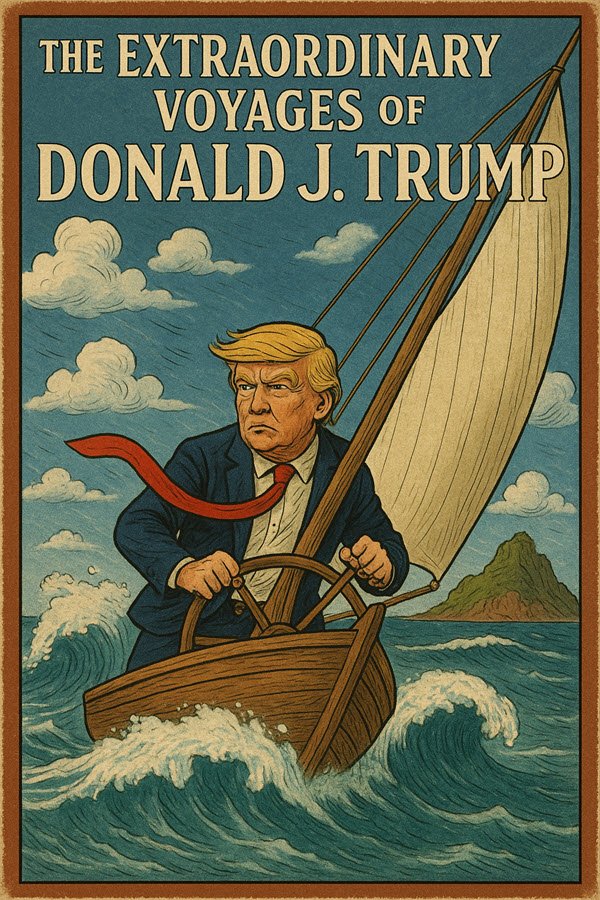
Donald Trump was inspired. In fact, he had a most glorious notion; this impulsive whim was conceived not in the dusty halls of learning nor among those afflicted with arithmetic or economic skills, but in the resonant chambers of self-proclaimed confidence.
The notion was this: that trade, being troublesome and full of numbers, might be better managed by sound.
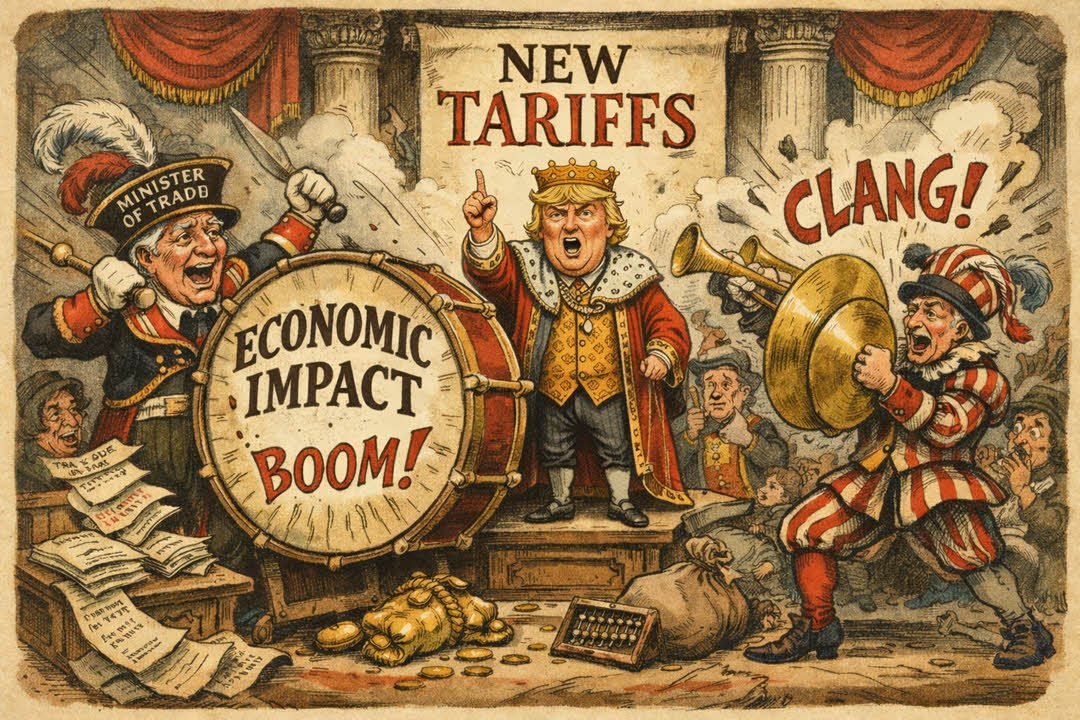
Thus, it was decreed that tariffs—those dull, tedious instruments of policy—should henceforth be announced and adjusted by trumpet or other fitting (and loud) musical instruments.
A modest levy would be expressed as a gentle whistle. A severe tariff, designed to punish distant lands for the crime of selling less expensive shoes, would be declared with a heroic blast audible many miles away.
And should confusion arise (as it invariably did), the solution was not explanation, but louder music (or rather sound).
Many musicians were summoned and rebranded as economic advisors. None could read a ledger, but all possessed the impressive ability to make sound at the loudest level. Their leader, a man who had once successfully blown a trumpet while standing on a balcony, was named Minister of Trade.
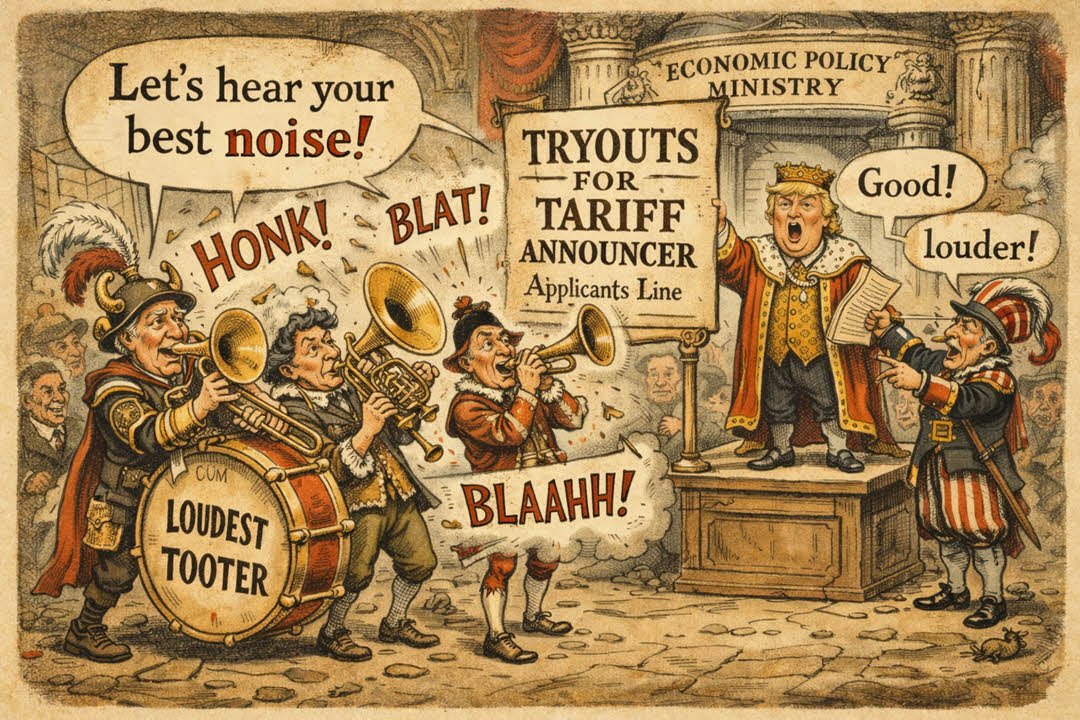
When merchants inquired how much extra they must now pay to import goods, the Minister replied, “Listen carefully.” He then produced a prolonged fanfare of such volume that the questioner forgot both the question and his own name.
Foreign kingdoms, upon hearing these blasts echo across the sea, assumed that Donald Trump had either declared war or was hosting a parade. In either case, they responded cautiously, raising their own tariffs, lowering them, then raising them again—sometimes in time with the music, sometimes not. The resulting harmony was described by scholars as “astonishingly atonal.”
The citizens were reassured daily that the loud noises signified strength. “A nation that is thoughtful and considerate of its neighbors is a weak nation,” proclaimed the Royal Herald, shouting over the brass section. “Only those uncertain of their greatness resort to being thoughtful and contemplative.”
Soon, every economic announcement required accompaniment. Grain tariffs were introduced with drums. Steel tariffs proclaimed with cymbals. A particularly confusing policy regarding washing machines involved a full marching band and a choir that sang only the words “we are winning.”
Those who suggested that tariffs might raise prices were accused of being anti-music. “You simply dislike the sound of prosperity,” officials sneered, stuffing cotton into their ears to avoid inconvenient questions.
Meanwhile, the marketplace became a place of constant performance. Shopkeepers adjusted prices not according to cost, but according to the most recent trumpet blast they could recall. Some charged more after loud notes, only slightly more after soft ones, and one enterprising baker priced his bread entirely by rhythm of the sounds.
Finally, when inflation marched proudly through the streets to a triumphant fanfare, the leaders congratulated themselves. “Behold,” they said, “the music has grown louder. The prices are higher and therefore, we know that the tariffs are working.”
And so, Donald Trump felt that the nation was becoming more prosperous. It was wealthier in the only way that mattered: the orchestra was enormous, the trumpets polished, a great ballroom was being built, and the noise so great that no one could hear the simple question whispering beneath the melody:
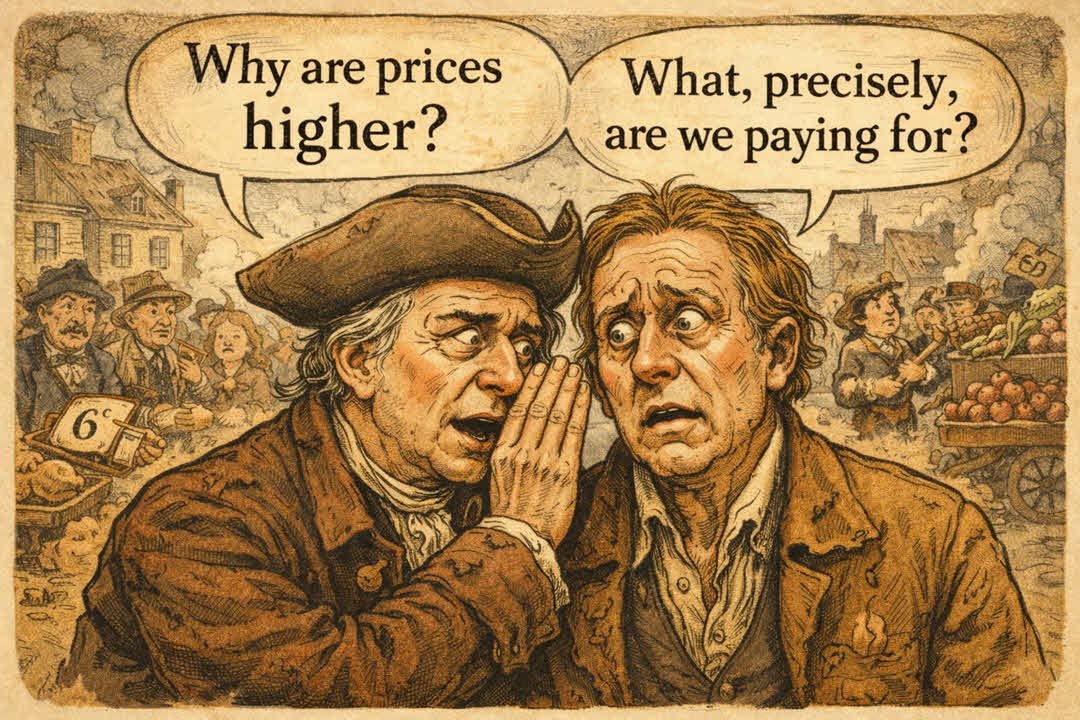
Why are prices higher? What, precisely, are we paying for?