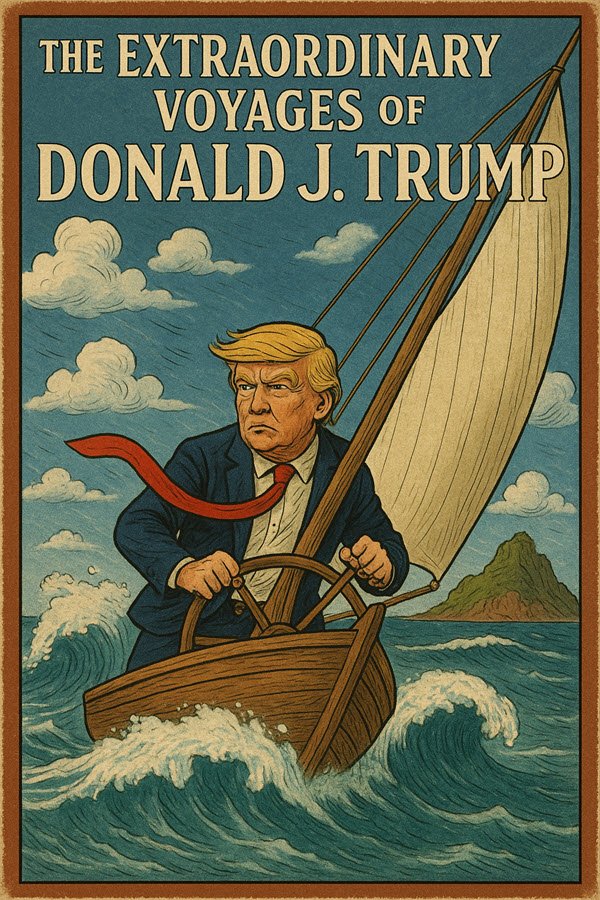
Every playground has one. The child who, upon discovering he has a slightly larger physique or a louder voice, decides that diplomacy is for the weak and that shoving is a form of leadership.
History, it seems, has not outgrown playground recess.

A country, like a child, may wake one morning and realize it owns a very large stick. Not a metaphorical stick—an actual one, forged of steel, able to intimidate merely by its presence, and capable of rearranging neighborhoods. At this moment of revelation, a dangerous thought often follows: Why talk, when we can threaten? Why negotiate, when we do whatever we want?
Thus begins the great pageant of national bullying.
The bully nation clears its throat, rolls its warships into view, and announces—often with great solemnity—that it is merely “defending its interests.” This phrase, translated from Official Bully Tongue, means: We would like something, and we are willing to knock over the swing set until you agree.
Curiously, the bully never admits to enjoying the intimidation. It insists the warship and our actions are “regrettable,” the jets “necessary,” and the saber-rattling “reluctant.” Like the schoolyard menace who claims, mid-shove, that the other child “started it by existing too close,” the bully frames aggression as a moral duty.
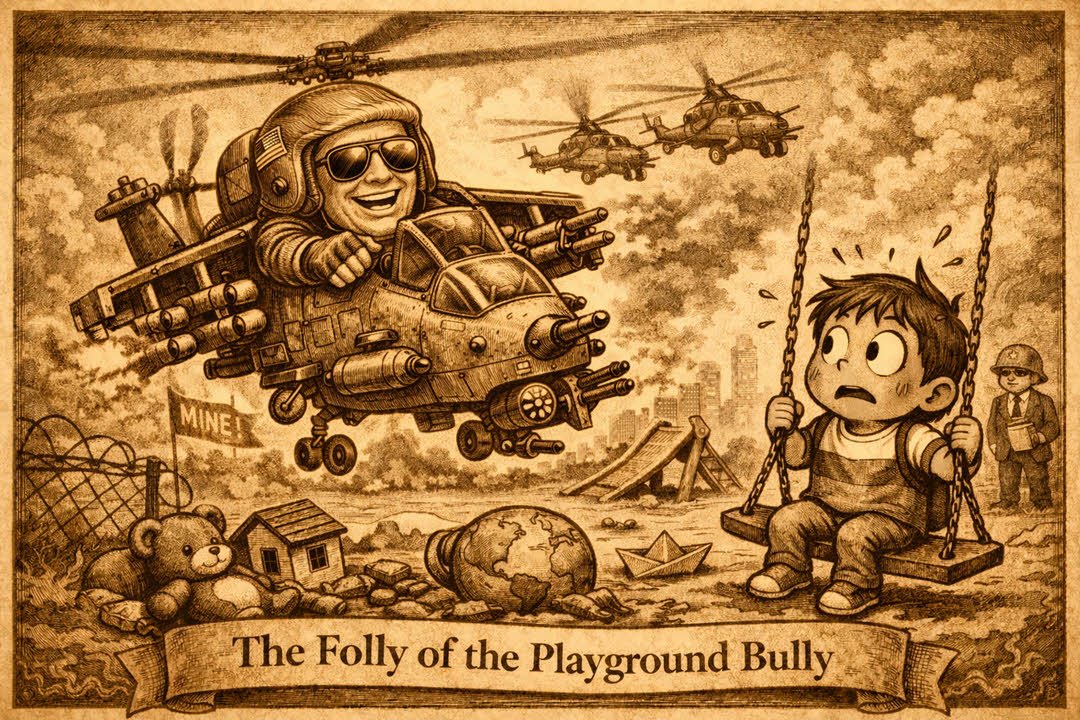
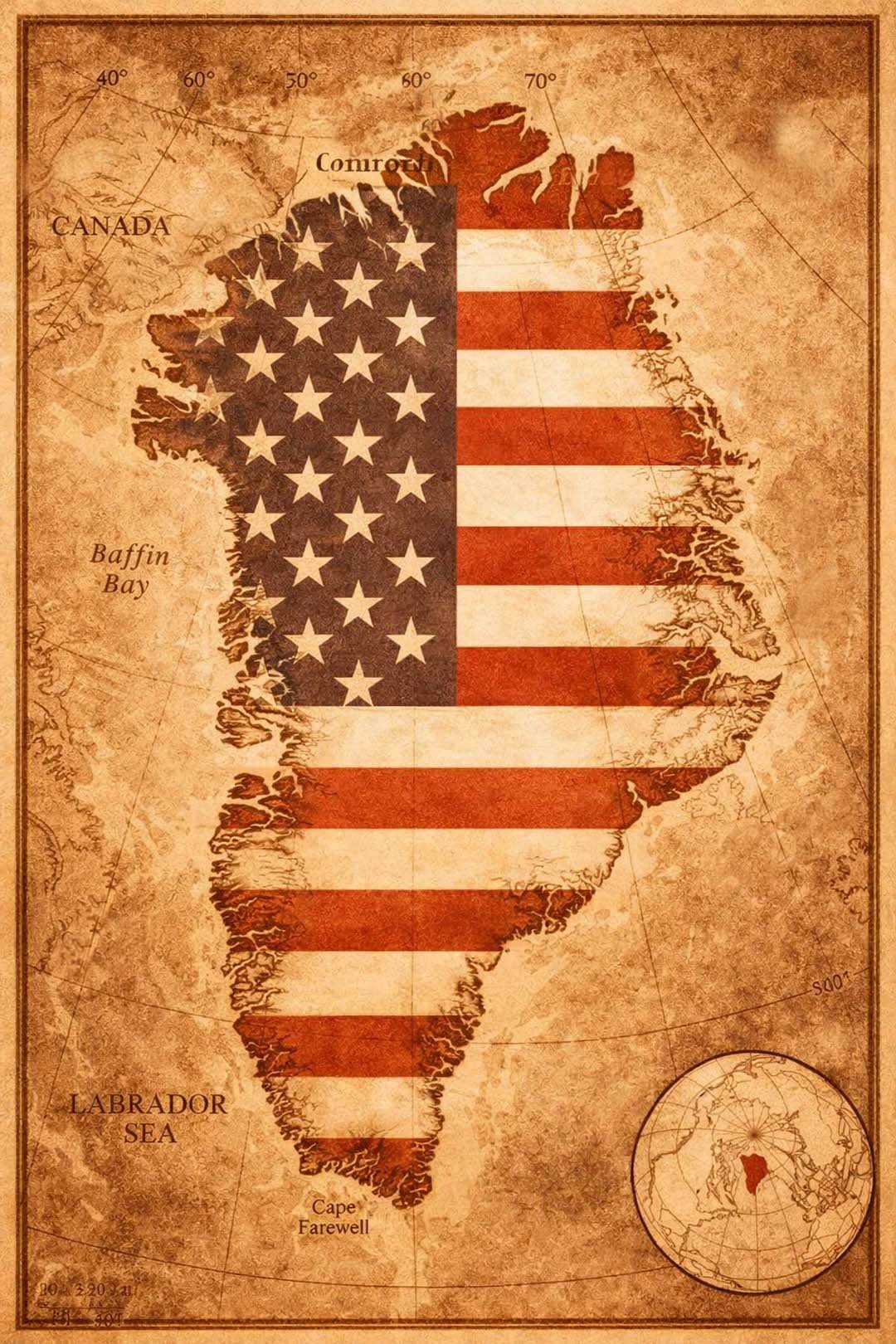
What follows is the ritual display. Military exercises just happen to take place near the smaller neighbor’s fence. Perhaps, an aircraft carrier is flaunted in its particularly lethal way. Maps are unfurled on television, with the bully’s flag placed upon the weaker country. All of it is designed to convey a simple message: We are big. You are small. Please tremble, and do so politely.
The irony, of course, is that this behavior rarely signals strength. True strength has little need for posture. The calm student does not scream across the playground about how tough he is; he is busy building something, learning something, creating something of real value to society or humanity.
The bully, by contrast, must constantly remind everyone of his size, lest someone forget and start enjoying themselves.
Meanwhile, the world watches with the weary expression of a teacher who has seen this performance too many times. Other nations murmur concern, call for restraint, and gently suggest that perhaps military intimidation is not the ideal opening sentence in a conversation. The bully nods gravely, promises peace, perhaps even indicates he should be awarded a prize for peace and then makes a bigger display of military prowess —just to be sure the point landed.
Eventually, as playground logic dictates, the bully discovers a tragic truth: intimidation breeds resentment, not respect. The smaller children do not suddenly admire him; they whisper, form alliances, and sharpen their own clever defenses. The game becomes more dangerous, the stakes higher, the scraped knees replaced with real suffering.
And still the bully wonders why no one trusts him.
If nations truly wished to demonstrate greatness, they might try the radical act of restraint. They might speak softly, lower the stick, and remember that unused power can be more impressive than power displayed. But that would require maturity—and playground bullies, whether six years old or millions strong, rarely graduate on time. They are often the slower students in the class.
In the end, history tends to favor the builders over the shovers. The bully may dominate the playground for a time, but recess always ends. And when the bell rings, it is seldom the loudest child who is remembered—only the one who knew how to play without breaking the toys.