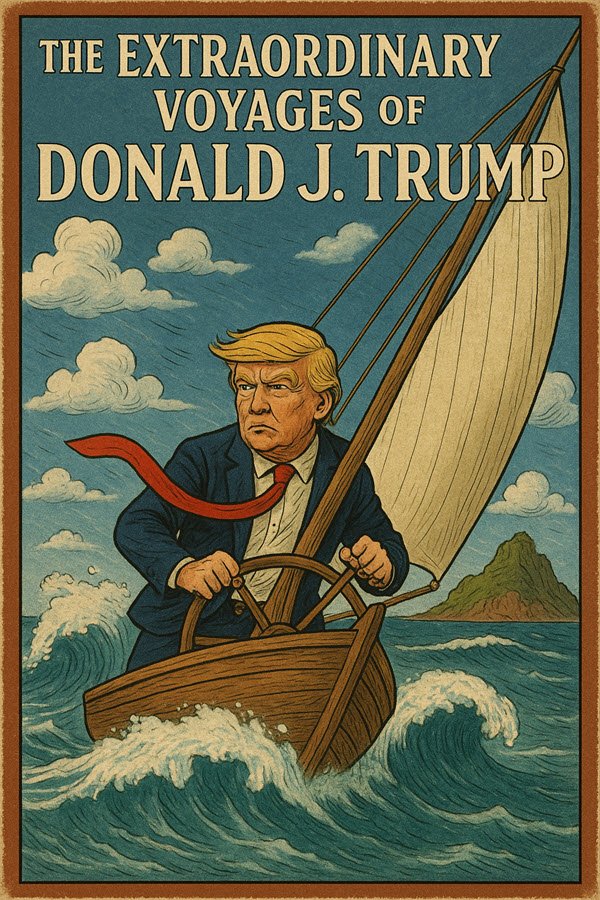
The Folly of Trump’s Tariffs
If you were to distill logical international trade into a single sentence, it might be this: economics is not a wrestling match. It is not won by shouting, flexing, or threatening the referee. It is a system of interdependence governed by arithmetic, incentives, and the occasionally annoying persistence of reality.
Which brings us to Donald Trump’s view of tariffs.
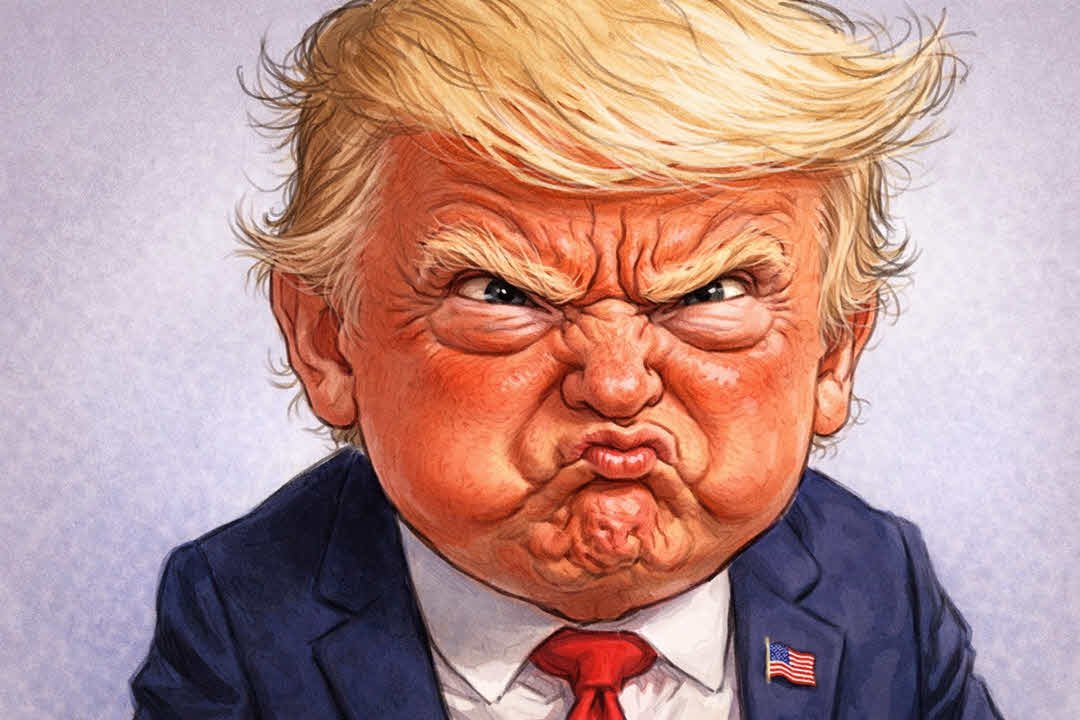
In the real world, trade policy is a delicate matter involving supply chains, comparative advantage, development strategy, long-term investment, and the complex interconnections of the global economy.
In Trump’s world, tariffs are a vending machine for patriotism.
Insert coin. Receive factory.
Trump’s view is a beautiful theory in its simplicity. However, it does not work as it ignores centuries of economic thought and the small matter of who actually pays the tariff.
Let’s start with fundamentals. Tariffs are taxes. They distort prices. They invite retaliation. They alter trade flows. Tariffs redistribute costs domestically. They are not magic spells; they are blunt instruments, very blunt.
Trump presents tariffs as something foreign countries pay out of shame and fear, as though Canada, Mexico, and China wake each morning to mail checks labeled “Thank You for the Lesson in Greatness.”
The critique of Trump and tariffs is simple: when you tax imports, you tax your own consumers and businesses that rely on those imports. You increase costs. You provoke countermeasures. You create uncertainty. Businesses perform better when there is little uncertainty. Trump increases uncertainty.
The Trumpian counter-critique is even simpler: Nonsense. We’re winning.
If one were to think clearly and long-term, one would consider sustainable development, coordinated global investment, and the need to build domestic strength through education, infrastructure, and technological innovation.
In Trump’s rallies, one hears about slapping a 100 percent tariff on a country until it behaves.
The difference is not merely ideological. It is metaphysical.
The global economy is a web of interdependence.
Trump sees it as a casino.
In reality, long-term prosperity requires cooperation, negotiated frameworks, and recognition that modern production spans borders. The smartphone in your pocket is a multinational artifact; its components do not salute one flag.
To Trump, the smartphone is presumably an American device unfairly assembled elsewhere by trickery.
The beauty of tariff politics lies in its theatrical clarity. It produces a villain. It produces a lever. It produces headlines. It does not produce factories overnight, but that is a secondary concern to Trump and his simplistic view.
Tariffs can have strategic uses, yes — targeted, temporary, embedded in a coherent industrial policy. But broad, impulsive tariff wars resemble setting fire to your own kitchen because the neighbors once borrowed some sugar.
The problem is not protection per se. It is protection as spectacle.
Trump treats tariffs like a medieval king treated moats: dig deeper, feel safer. The fact that modern economies operate through capital flows, technological ecosystems, and transnational logistics networks is an inconvenient footnote.
Modern economics means that production capability is developed and built. Trump suggests it can be bullied into existence.
And here is where satire becomes unnecessary. Because the arithmetic does not laugh.
When tariffs rise, costs rise. When costs rise, someone pays. Often, the very voters promised resurrection.
The irony is exquisite. The same rhetoric that promises liberation from global dependency often increases domestic inflationary pressure and supply chain instability.
We need to build competitiveness.
While Trump says we need to bill the foreigners. This is weird. This is not good thinking. It is not good for the American people. Micky Mouse is smarter than Trump.
Here is a list of real headlines published by Bloomberg News in a single week
Tuesday Morning: Trump’s Tariffs Are Madness
Tuesday Afternoon: Trump’s Tariffs Are A Clown Show
Wednesday Morning: Stocks Are Falling
Wednesday Afternoon: It Could Have Been Worse
Thursday Morning: Trump Blinks
A long-term approach to economic development is slow, structural, and boring.
Trump’s approach is loud, immediate, and electorally intoxicating.
Tariffs can be seen as tools within a broader policy architecture and should be used properly, cautiously, and with wisdom. Trump’s use of tariffs is neither proper nor cautious, and certainly not wise.
Tariffs in the Trump universe are applause lines with a customs form.
The tragedy is not that tariffs exist. It is that they are marketed as moral purification rituals rather than fiscal instruments.
In the end, economics remains stubborn. It does not bend to volume.
And no matter how often one declares victory over arithmetic, the math eventually sends its invoice.