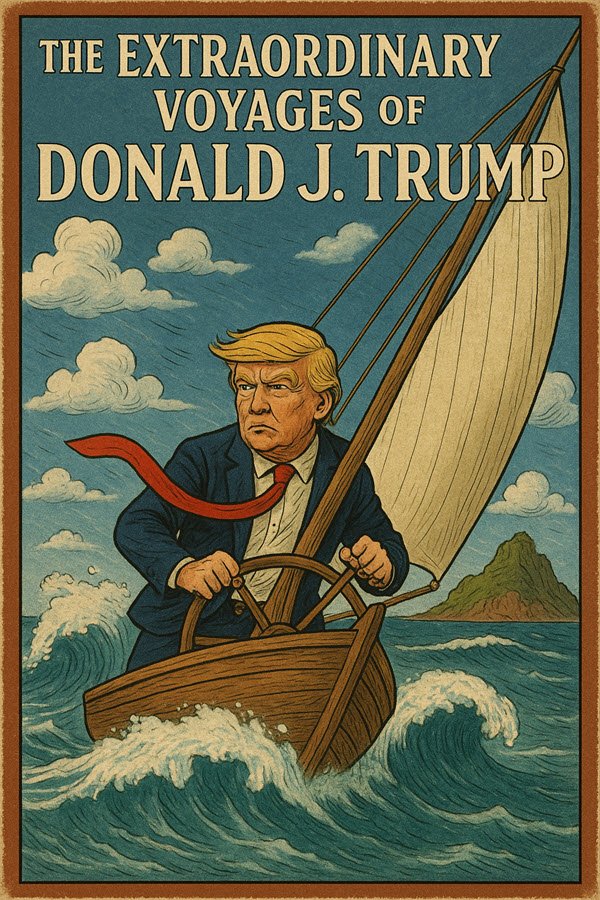
Principles are fundamental truths, rules, or beliefs that guide behavior, systems, or understanding.
Once upon a time, America stood for limited government, the rule of law, a strong but restrained defense, and alliances built on trust rather than invoices. This was not nostalgia; it was policy. These ideas were so central that conservatives once carved them into marble, quoted them reverently, and accused everyone else of insufficient devotion to them.
Which raises a small, inconvenient question: do those values still apply, or were they merely decorations?
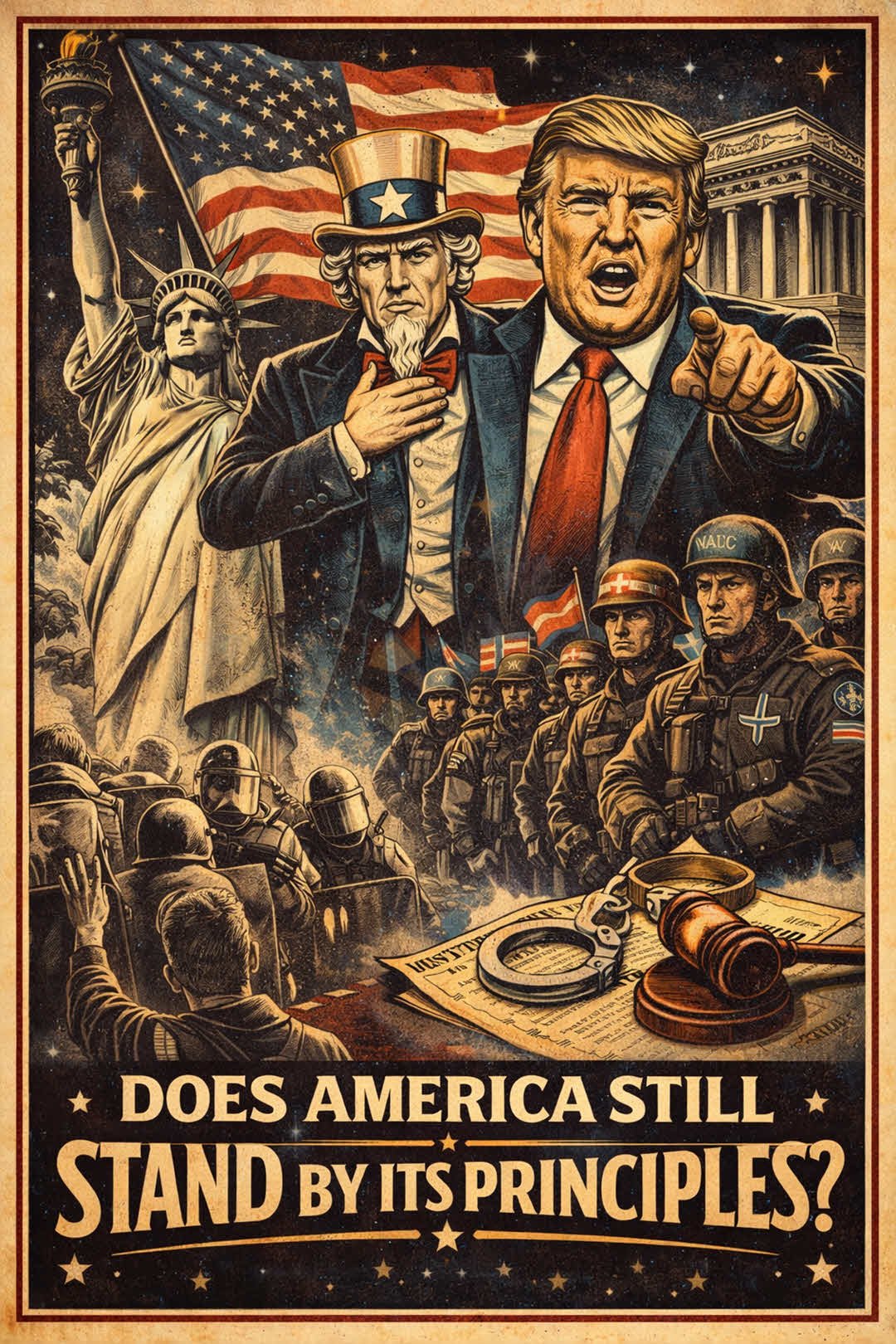
Enter the Greenland affair, a diplomatic farce in which the President of the United States—Donald Trump—threatens Denmark, one of America’s most reliable allies, with tariffs unless it sells a sovereign territory like a distressed timeshare. This is presented as “strength,” though it resembles strength in the same way a tantrum resembles resolve.
Let us pause to admire the logic. Greenland belongs to Denmark. Denmark belongs to NATO. NATO exists precisely to prevent large countries from menacing smaller ones under the helpful guise of “protection.” When the United States adopts the language of the bully it once opposed, something has gone profoundly sideways.
Tariffs, we are told, will force compliance. These tariffs—taxes paid by Americans—are now deployed not as economic tools but as cudgels against friends. This is not conservative economics; it is strong-arming. It assumes the world is a real estate deal and diplomacy is escrow.
And this logic does not stop at borders. When courts question the legality of these sweeping tariffs, they are brushed aside. When peaceful protesters are met with force and political opponents with investigations, we are assured this is normal. It never is. Once normalized, authoritarian tools do not politely restrict themselves to their original targets.
What is most striking is not the President’s worldview—he has always measured worth in money and obedience—but the silence of those who once claimed to care about restraint. How is the Republican Party comfortable with a politics that replaces law with leverage and alliances with loyalty tests?
Strong nations do not extort their friends. Strong leaders do not need threats to be obeyed. And strong democracies do not confuse public power with personal will.
America’s strength was never that it could take what it wanted. It was that it didn’t have to. When we treat our closest allies like adversaries and call it leadership, we are not seeing America at its best. We are watching it forget what it once stood for.
And forgetting, as history reminds us, is never harmless.