Did Texas Just Vote for Democracy (Accidentally)?
It is considered poor etiquette in modern American politics to acknowledge reality while it is still unfolding. Therefore, when Texas briefly wandered off script and voted for a Democrat, the proper response was not analysis but denial. Donald Trump, ever the master of this tradition, handled the matter with his usual grace: first by personally intervening, then by losing spectacularly, and finally by pretending the entire thing was beneath his notice.
This, readers will be relieved to learn, is not a defeat. It is merely a “local race.”
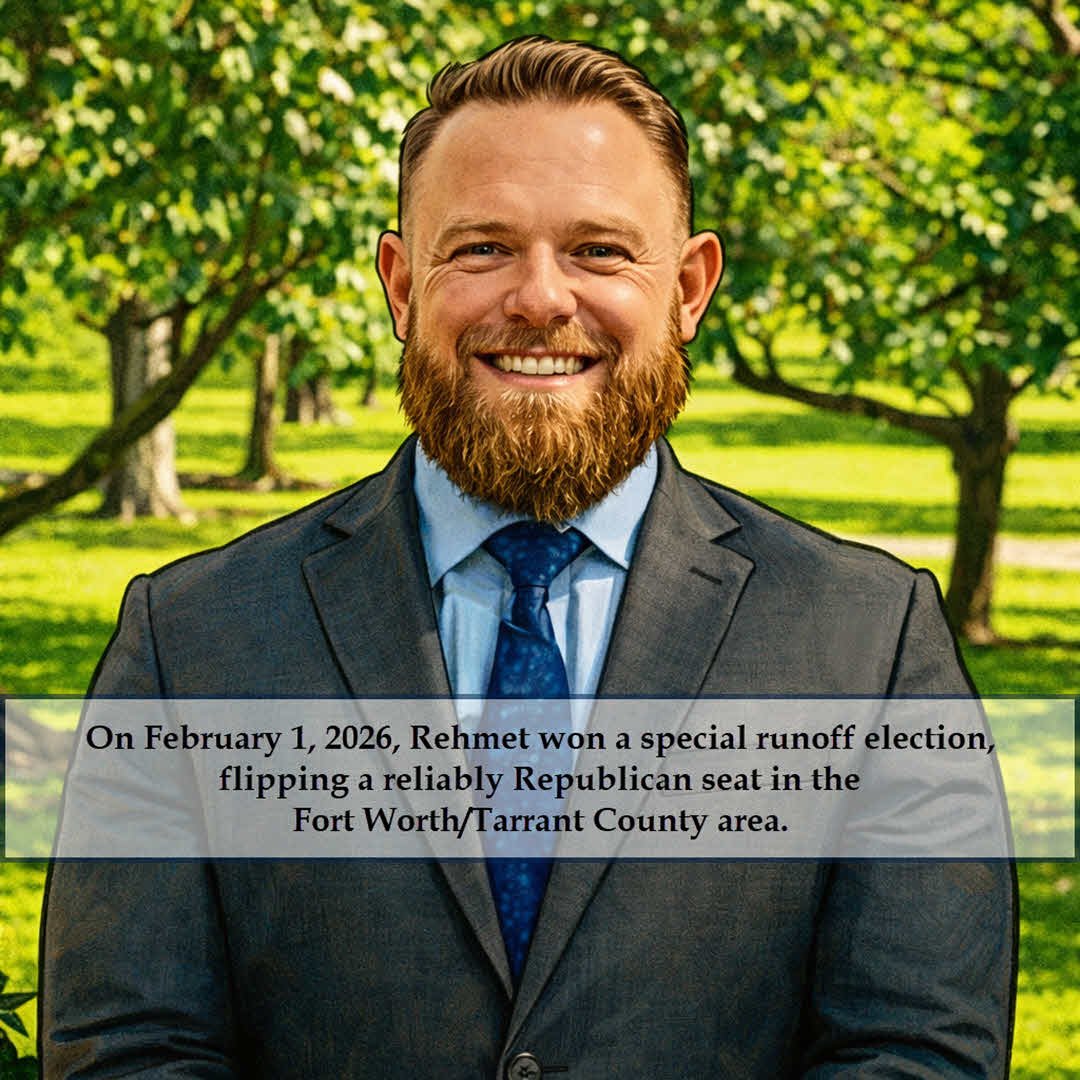
Taylor Rehmet Won A Special Election
Taylor Rehmet’s victory in Texas’s 9th State Senate District has been described by some reckless observers as a “political earthquake.” These people clearly lack perspective. After all, what is a thirty-point swing in a district Trump carried by seventeen points just months ago? A rounding error. A clerical inconvenience. A brief malfunction in the voting machines of destiny.
Trump, to his credit, did everything one could reasonably expect of a man who insists elections are rigged unless he wins them. On the morning of the vote, he thundered onto Truth Social to rally “America First Patriots,” personally endorsing Republican candidate Leigh Wambsganss and urging turnout. This is important because it establishes causality. When the endorsement fails, the conclusion is obvious: the endorsement was irrelevant.
Once the results came in, Trump demonstrated admirable consistency by distancing himself from the race he had discovered earlier that same day. The defeat, you see, was not national, ideological, or symbolic. It was merely “local.” Much like inflation, crime statistics, and court rulings, elections only count when they flatter him.
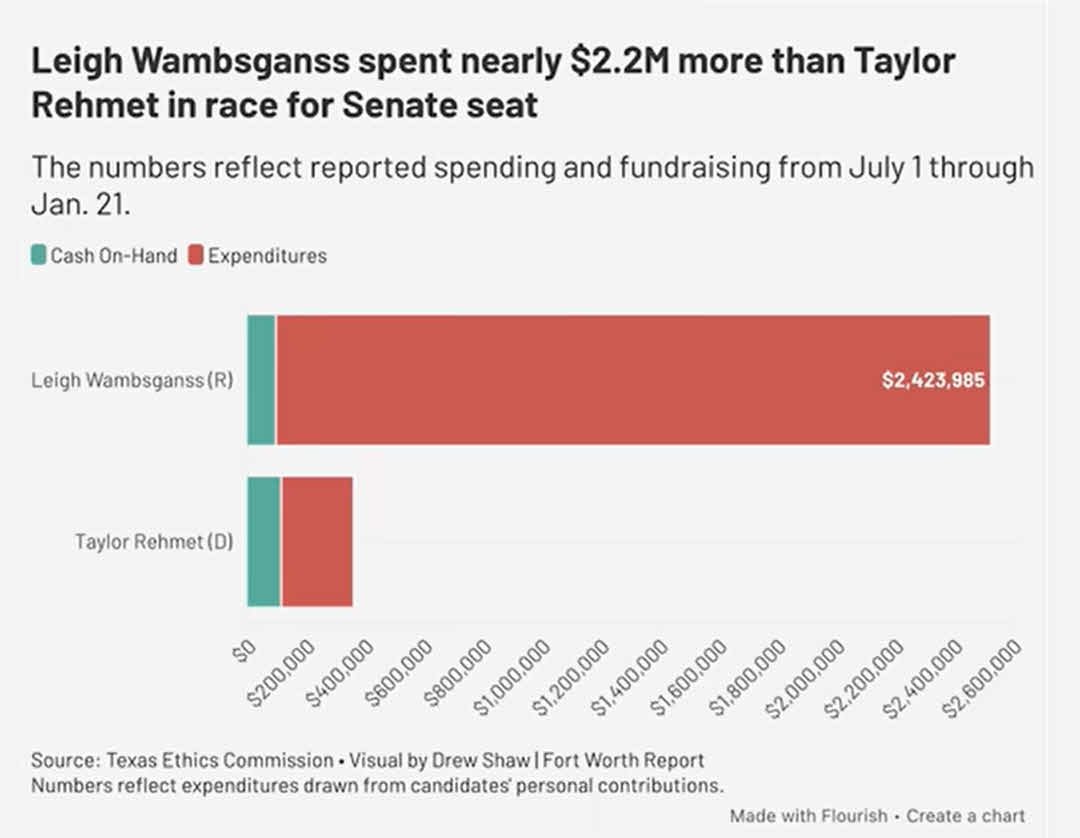
Moreover, the republicans did outspend the Democrats by a significant margin (about six times more). The republican was certainly supposed to win, but alas did not.
What troubles Republicans more than the loss itself is the math. The swing was not subtle. It was not marginal. It was not the sort of polite shift pundits can dismiss with weather metaphors. It was a thirty-point lurch, a punch in the gut, in a state whose leadership insists, loudly and often, that Democrats are an endangered species best observed in zoos or coastal cities.
Even Wambsganss, in the traditional post-loss ritual, called the result a “wake-up call.” Unfortunately, she clarified that the lesson was not about policy, messaging, or alienating voters, but about mobilizing the base harder next time.
This is rather like responding to a kitchen fire by purchasing a louder smoke alarm.

Rehmet’s background further complicates the narrative. He is not a billionaire, a cable news personality, or a culture-war influencer. He is a union leader, an aircraft mechanic, and a politician who appears to believe that government might exist for purposes other than grievance management. This is unsettling because it suggests voters may have responded to substance rather than slogans.
Naturally, national Democrats noticed. Congresswoman Jasmine Crockett, who is challenging Senator John Cornyn, seized on the moment with the enthusiasm of someone who understands momentum when she sees it. Republicans, by contrast, are performing their favorite ritual: staring directly at the evidence while insisting nothing is happening.
The larger question, of course, is whether this “local” anomaly might repeat itself. Midterms have a way of doing that. Small blue ripples in unexpected places have a historical tendency to grow, especially when paired with unpopular policies, cultural exhaustion, and leaders who treat every loss as an insult rather than information.
Texas, it turns out, may not be immune to arithmetic. Perhaps, just perhaps, this was an accident, and this Texas district voted for the Democrat and democracy by accident. Perhaps not. We will see.
The November 2026 midterms will be described in advance as a referendum, a reckoning, and a battle for the soul of the nation. In reality, they will be something more mundane and therefore more dangerous: a test of whether denial can still outpace math.
If Texas keeps voting like this, someone may eventually be forced to admit that democracy has not died. It has merely been temporarily inconvenienced.
And that, for certain people, is the real earthquake.