No Person Rises Entirely Alone
In every successful society, there exists an unspoken agreement between the individual and the larger community. Everyone needs to realize that no person rises entirely alone. Wealth, opportunity, security, education, and social mobility are rarely the products of isolated effort. They are built upon systems maintained by countless others: public schools, roads, laws, courts, stable markets, scientific progress, national defense, infrastructure, and generations of citizens who helped sustain the institutions that make prosperity possible. For this reason, privilege is not merely a private achievement. It carries with it a public obligation.
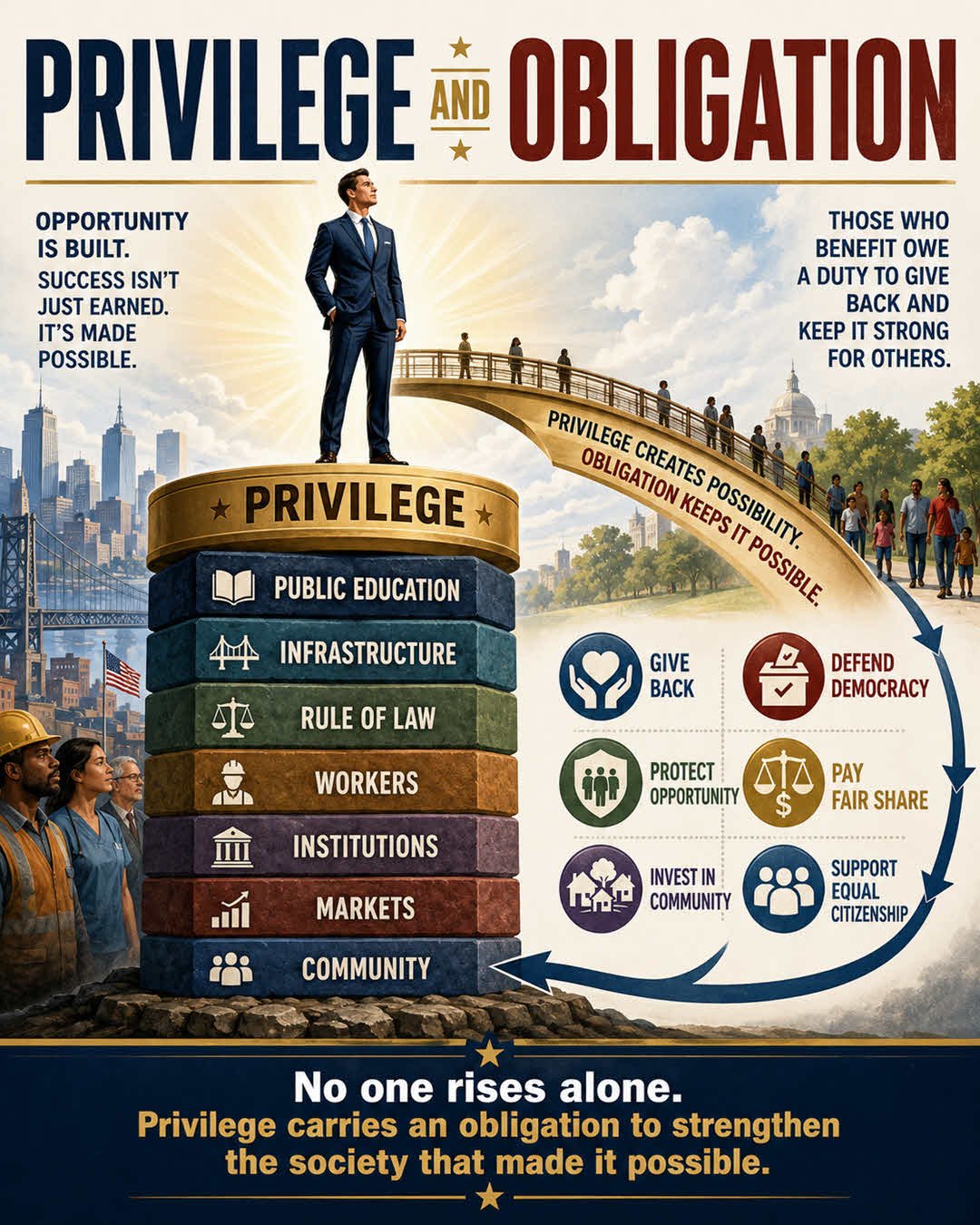
Modern culture often celebrates success as though it were purely individual. The self-made myth remains deeply embedded within American identity. Hard work certainly matters. Talent matters. Discipline matters. Yet even the most accomplished individuals typically benefit from advantages that society itself helped provide. A person born into stability, good schools, safe neighborhoods, social networks, functioning institutions, and economic opportunity begins life with advantages unavailable to many others. These advantages may not guarantee success, but they create conditions where success becomes far more attainable.
The recognition of privilege should not produce shame. It should produce responsibility.
A healthy democracy depends upon citizens who understand that prosperity creates obligations beyond personal comfort. The fortunate owe something back to the society that enabled their success. This debt is not financial alone. It is civic, moral, and institutional. In the case of the American democracy, it includes supporting democratic norms, defending equal opportunity, contributing to the public good, and resisting the temptation to withdraw entirely into private self-interest.
Throughout history, stable societies have survived when their most privileged citizens accepted stewardship rather than entitlement. It is important to consider how when elites view themselves as permanently detached from the struggles of ordinary people, social trust deteriorates. Inequality hardens. Cynicism grows. Citizens begin to believe that the rules are designed only to benefit the powerful. Eventually, resentment replaces civic unity, and democracy itself weakens under the strain. Donald Trump is an example of someone who seems not to care about the common man (if such a man exists) but rather considers how to enrich himself even if at the expense of the people who elected him to serve.
This principle applies not only to economic privilege but also to social and cultural privilege. Those who possess greater influence within institutions — whether because of wealth, race, education, or status — often have greater ability to shape public outcomes. With influence comes responsibility. Silence in the face of injustice becomes a form of participation in maintaining it.
This is especially true when discussing minority rights and pluralistic democracy. Historically, marginalized groups have often been forced to fight alone for recognition, dignity, and equality. Yet major social progress typically occurs only when people outside those communities decide the issue is not merely “their problem,” but a shared national concern. Privilege becomes meaningful not when it protects comfort, but when it is used to defend fairness and human dignity for others. Today’s republican party and indeed, Donald Trump, do not protect human dignity. Our wonderful country is no longer the beacon of hope for less fortunate people.
There is also a deeper philosophical truth beneath this discussion. Democracies are not sustained solely by laws or constitutions. They survive through habits of mutual obligation. Citizens must believe they are connected to one another by something larger than personal gain. A society where everyone seeks only advantage for themselves eventually becomes fragmented and unstable.
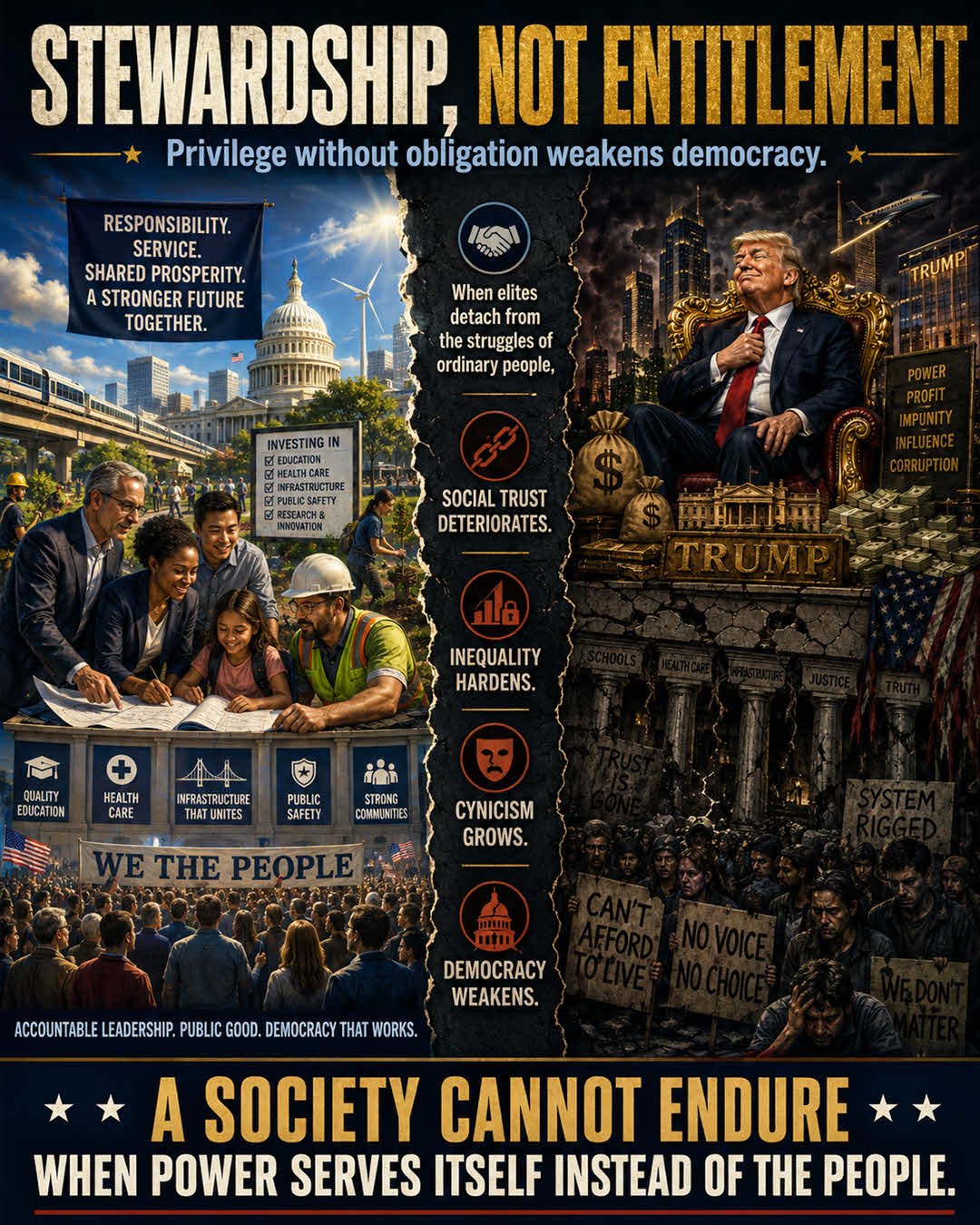
The question facing modern America is therefore not whether privilege exists. It clearly does. The more important question is whether privilege will continue to be understood as license, or whether it will once again be paired with obligation.
A republic cannot endure if those who benefit most from society feel no responsibility toward the society itself. The true measure of civic maturity is not how much a person accumulates, but how willing they are to help preserve the conditions that allow others to flourish as well.
A Special Example – Elon Musk
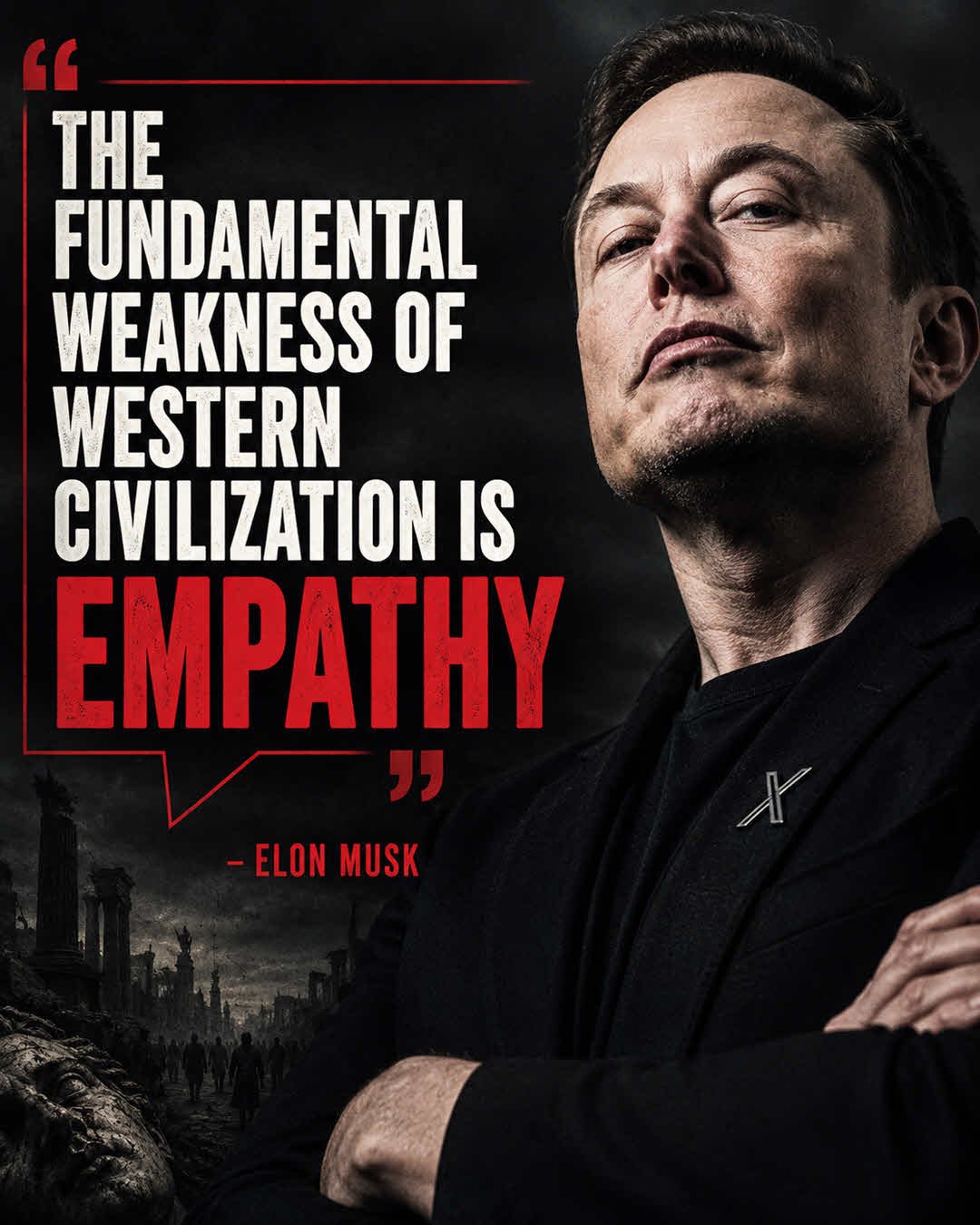
Elon Musk’s public posture often seems to reveal little commitment to improving American society in a broad civic sense, especially if improvement means making life more secure, humane, and dignified for all citizens rather than merely accelerating technology, markets, or personal influence. His reported claim that “the fundamental weakness of Western civilization is empathy” is especially revealing because empathy is not a decorative virtue in a democracy; it is one of the moral foundations that allows citizens to recognize the suffering of people unlike themselves.
A society cannot be improved by intellect alone. It also requires obligation, restraint, humility, and concern for the common good. Musk’s worldview, at least as expressed through this anti-empathy rhetoric, appears to elevate efficiency, disruption, and dominance above shared responsibility. That may produce rockets, apps, and spectacular fortunes, but it does not necessarily produce a healthier republic. A nation is not a machine to be optimized only for output. It is a human community composed of workers, families, immigrants, children, the elderly, the vulnerable, and the unlucky.
When a privileged billionaire treats empathy as weakness, he rejects the very quality that should guide those who have benefited most from society. The powerful owe a debt to the public systems, workers, laws, consumers, and institutions that helped make their success possible. Without empathy, privilege becomes entitlement. With empathy, it can become obligation.