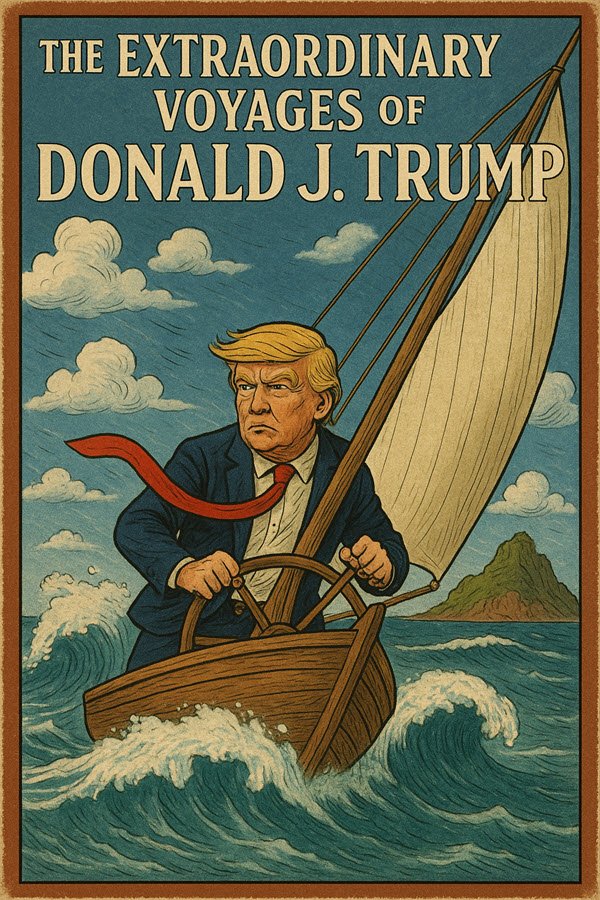
A book with Donald Trump in the title creates a reasonable expectation. The reader assumes that Donald Trump will be the exhibit, the rest of us will be safely behind the velvet rope, and perhaps a docent will explain the subject’s unusual features.
The Extraordinary Voyages of Donald J. Trump is less accommodating.
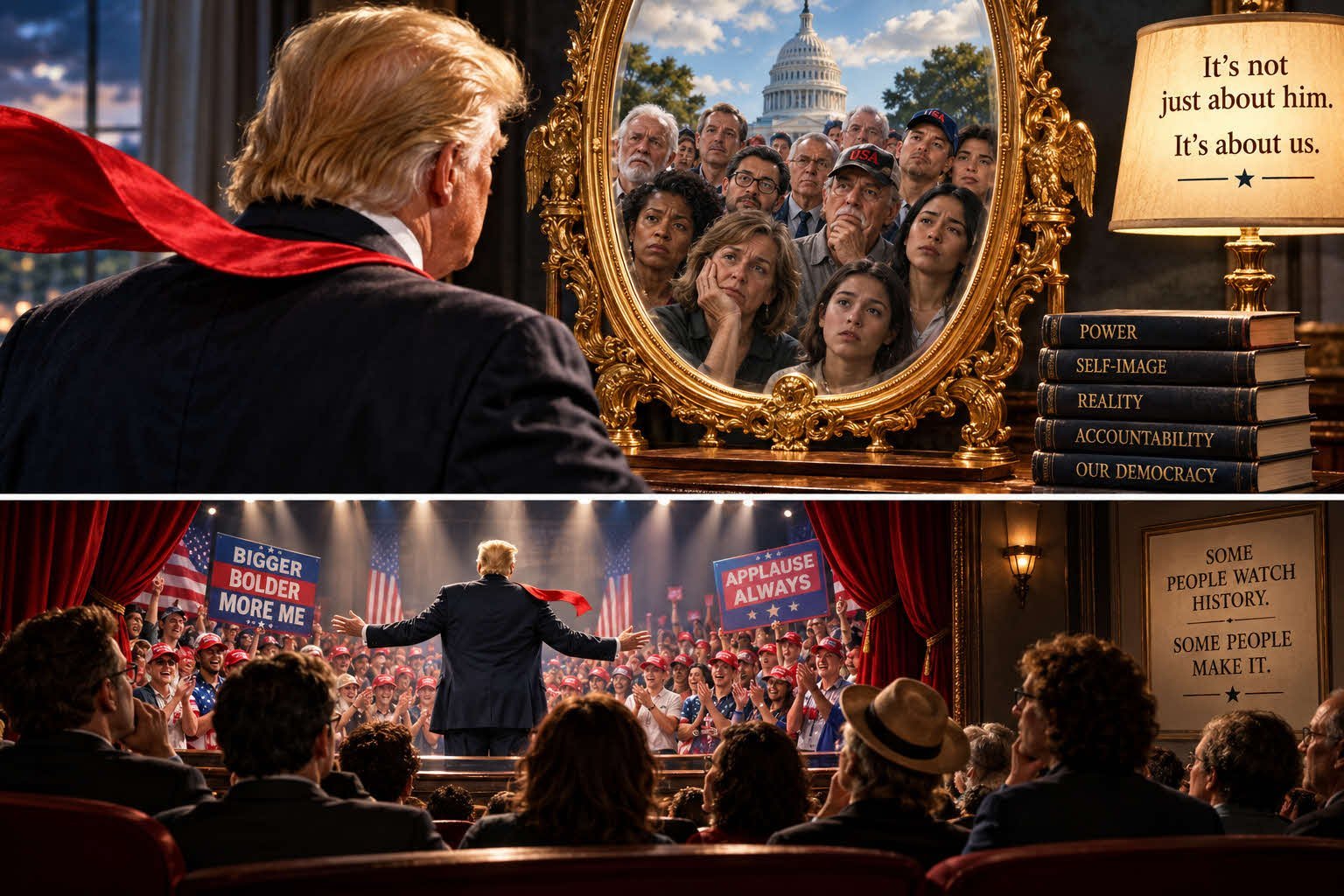
Its traveler moves through fantastical kingdoms whose customs initially seem ridiculous. Note that truth is sometimes adjusted for convenience. Loyalty is treated as evidence. Spectacle is mistaken for substance. Power develops the curious conviction that applause is a natural resource and should therefore be extracted continuously.
This would all be comforting if the kingdoms remained imaginary.
But satire has an irritating habit of turning the telescope around. We begin by examining a strange country and eventually notice that the furniture looks familiar. The citizens have recognizable excuses. The officials possess recognizable appetites. Even the public ceremonies bear an uncomfortable resemblance to what we have watched on television while eating dinner, wondering whether somebody else was going to do something about it.
Donald Trump makes an unusually effective traveler through such a world because he is impossible to mistake for scenery. He arrives with the subtlety of a brass band entering a library. Yet the larger question is not merely what he does when confronted by absurd systems. It is why those systems can function at all.
A king can demand applause. He cannot applaud himself loudly enough to fill a stadium.
A ruler can bend truth. He still requires people willing to hold the ruler while somebody moves the measuring marks.
A politician can turn public life into theater. But theater requires an audience, and eventually the audience must decide whether it bought tickets to observe the performance or accidentally became part of the cast.
That is where The Extraordinary Voyages of Donald J. Trump becomes something more interesting than another book about Donald Trump. The voyages use fantasy to create a little distance between the reader and the familiar. Distance is useful. It allows us to laugh before realizing precisely what we are laughing at.
Perhaps Trump is the subject. Perhaps he is the guide. Perhaps he is simply the large, brightly painted sign beside the road telling us where we have arrived.
The uncomfortable possibility is that the voyage has always been ours.
Continue the voyage: The Extraordinary Voyages of Donald J. Trump: Clarity begins when the mirror stops being flattering, by H. Jester Fieldstone, is available on Amazon.