The Name Comes Off
Last night I went to a birthday party with a small group of friends. This group is sometimes referred to as “The Gang.” It was a fun affair and honored two members of the gang with food, drink, and two birthday cakes.
Part of the evening was spent watching the live feed of MSNOW. MSNOW had a camera on the side of the Kennedy Center, and we watched with a significant degree of satisfaction the removal of the letters spelling out the name of Donald J Trump.
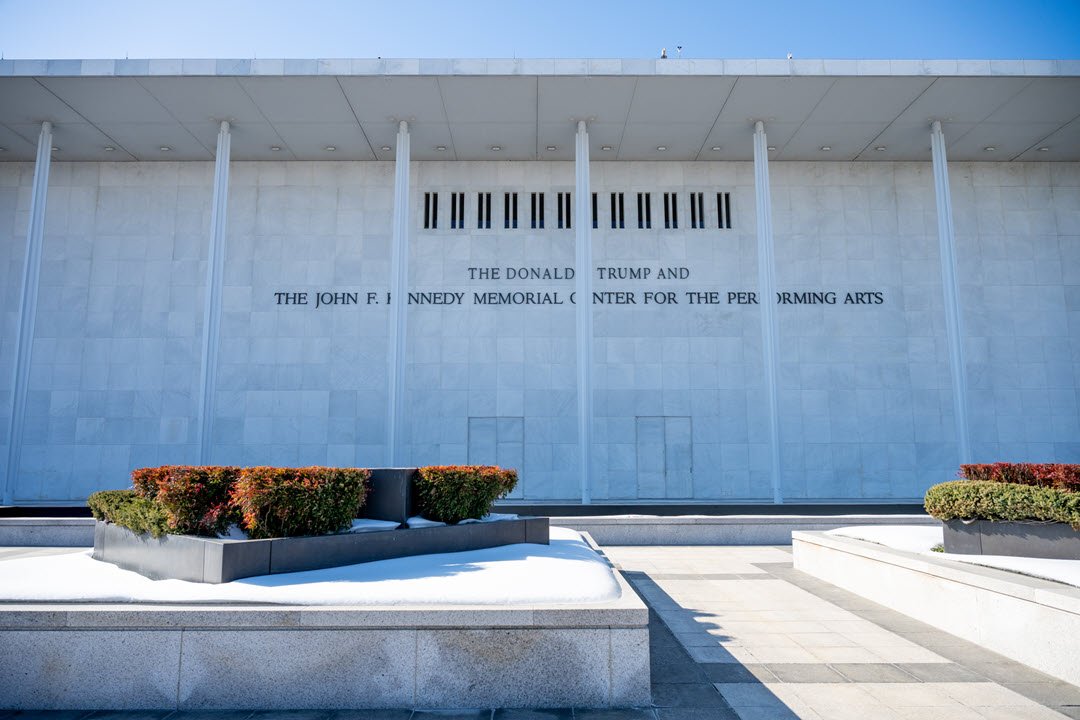
Donald Trump’s name came off the Kennedy Center because it never belonged there in the first place.
It made me think.
Donald Trump’s name came off the Kennedy Center because it never belonged there in the first place.
That sentence, by itself, has the satisfying sound of a door closing, a gavel falling, or a custodian finally removing a gold-plated sticker from a public monument. But the timing makes the event even better. Trump’s name came down as a sort of birthday present to Donald Trump: the rare gift history gives to vain men when it has run out of patience.
There are birthday cakes. There are birthday cards. And then there is a worker on scaffolding, peeling your name off a building you tried to make yours.
One imagines Trump’s ideal birthday celebration quite differently: marching bands, floodlights, a cake large enough to be investigated by Congress, perhaps a choir of cabinet members singing loudly “For He’s a Jolly Good President.” Instead, the republic offered him something more useful: a lesson in ownership.
Donald Trump had confused proximity with inheritance. He had confused temporary power with permanent honor. He had confused the ability to place his name on a wall with the right to belong there.
The contrast is outstandingly grotesque.
John F. Kennedy’s name belongs on (and to) the Kennedy Center not because it is printed there in large letters, but because the name carries the weight of service, sacrifice, public purpose, and historical memory. The Kennedy family of that generation answered their country’s call to duty. They went to war. They entered public life. They suffered loss. They understood, however imperfectly and humanly, that citizenship required something more than show and audacity.
Trump, on the other hand, dodged his call.
The Kennedy brothers sacrificed for something larger than themselves. Trump has spent a lifetime demanding that others sacrifice for him: their reputations, their careers, their principles, their constitutional obligations, their belief in truth, their willingness to distinguish reality from a press release.
The Kennedy name was earned.
The Trump name was marketed.
The Kennedy name is associated with service.
The Trump name is associated with self.
That is why one endures, and the other must constantly be engraved, illuminated, promoted, licensed, trademarked, sold, defended, litigated, and reattached with fresh adhesive tape.
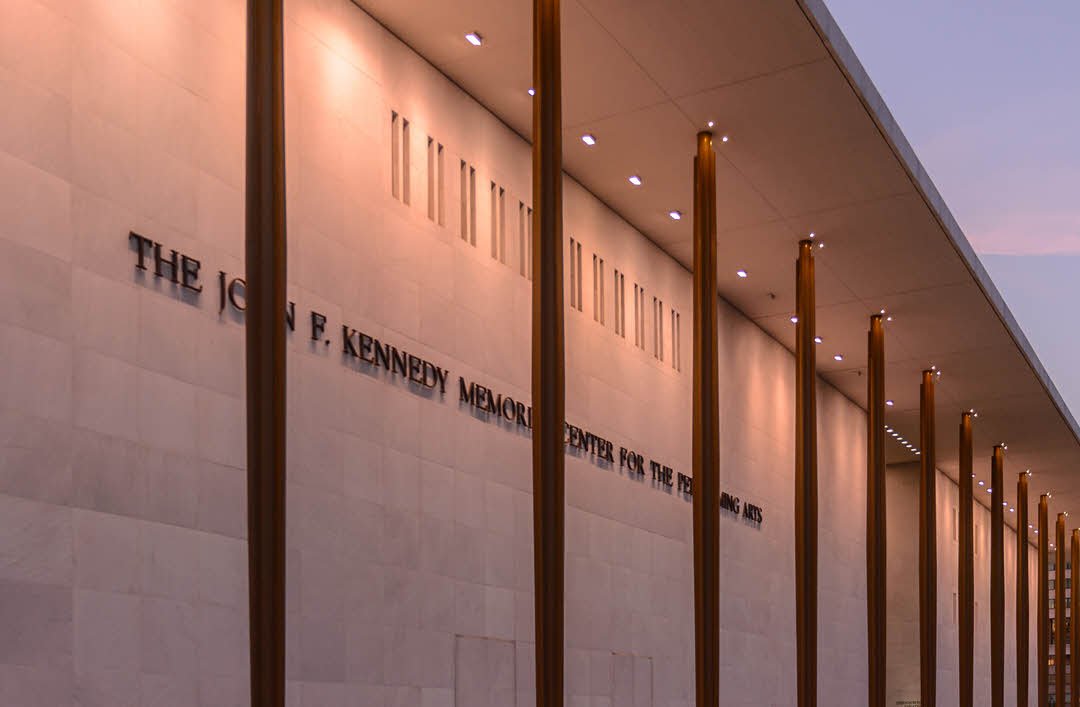
Dignity Restored
A real legacy does not require a branding consultant. It does not need a board of loyalists to fasten it onto marble. It does not need emergency appeals, legal maneuvers, public tantrums, or scaffolding erected in the dark and then covered with scaffold sheeting. A real legacy survives the removal of letters because it was never made of letters in the first place.
That is what Trump never understood and will not understand.
He has spent his life believing that possession is ownership. If his name is on the building, the building is his. If his face is on the screen, the story is his. If his voice fills the room, the truth is his. If his followers cheer loudly enough, history must surrender.
But history is not a rally crowd. It does not clap on command. It does not buy commemorative hats. It does not confuse volume with meaning. It waits. It watches. Then, with terrible calm, it sends in a work crew.
The workers removing Trump’s name from the Kennedy Center were not simply taking down letters. They were restoring proportion. They were restoring integrity. They were restoring the basic civic distinction between a public monument and a private vanity plate.
There is something comic in the physicality of it. The ladders. The tools. The tarp. The slow extraction of each letter from the facade, as though the building itself had developed an allergic reaction to the name of Donald Trump.
Off comes the T.
Off comes the R.
Off comes the U.
One by one, the letters of the alphabet resign.
And with each removed letter, the old truth becomes clearer: public honor cannot be seized by men who mistake self-advertisement for service.
Trump promised strength. He promised dominance. He promised victories so frequent and overwhelming that Americans would grow tired of winning. Instead, Americans have been treated to a long national seminar in collapse: boasts collapsing into excuses, threats collapsing into reversals, promises collapsing into merchandise, institutions bending and then slowly remembering they have spines.
The pattern is always the same.
The boasting comes first.
The spectacle follows.
The disappointment arrives.
The illusion collapses.
Then, in some cases, the name comes off.
His supporters often confuse noise with strength. They mistake performance for leadership. They mistake branding for achievement. They mistake a man standing in front of a building for a man worthy of the building.
History makes no such mistake.
John Kennedy’s legacy was not created by letters on a wall. It was earned in war, shaped in politics, and sealed in national memory by sacrifice. Trump has spent decades attempting to purchase what Kennedy earned. He has bought signs, towers, resorts, steaks, universities, slogans, hats, lawyers, silence, applause, and loyalty. But honor is stubbornly nontransferable. It cannot be bought wholesale. It cannot be installed by committee. It cannot be fastened to limestone with executive enthusiasm.
A nation that cannot distinguish between sacrifice and vanity has lost its bearings. That is why the Kennedy Center matters here. Not merely as a building, not merely as a performance hall, but as a test of civic meaning.
The Kennedy Center should honor a family that gave much to the country.
It should never be used as a monument to a man who has spent his life asking what America can do for him.
The line is not subtle. It is not difficult. It does not require a graduate seminar in constitutional symbolism. On one side stands public service. On the other stands personal advertising. On one side, a name borne by memory. On the other, a name affixed by power.
The workers on the scaffolding understood what the flatterers did not: some names are placed on buildings because the building is trying to honor the name. Other names are placed on buildings because the name is trying to conquer the building.
Trump’s name did not elevate the Kennedy Center.
The Kennedy Center embarrassed Trump’s name by revealing what it lacked.
The most powerful thing about the removal was not that the letters came down. The most powerful thing was that the building survived them.
There it stood, after the noise, after the vote, after the lawsuit, after the emergency appeal, after the gold-lettered fantasy had been pried from its surface. Still there. Still the Kennedy Center. Still tied to a murdered president whose call to service has outlived television fame, real estate boasting, and the exhausted circus of Trumpian self-celebration.
The Kennedy brothers lie beneath simple markers at Arlington National Cemetery.
Donald Trump wanted his name in giant letters on the side of a building.
The distance between those two facts explains everything.
And so, the workers climbed the scaffolding. The crowd watched. The letters spelling Donald J Trump were removed. The name came off and is now in the dustbin of history, at least as it relates to The Kennedy Center.
John Kennedy stayed.
History rendered its judgment.