There are moments in American life when the soaring poetry of technological ambition meets the humiliating reality of infrastructure, and a nation built on slogans is forced to ask whether anyone remembered to order the parts.
This is one of those moments.
For years, Silicon Valley has assured us that artificial intelligence will transform everything. It will write our emails, drive our cars, diagnose our diseases, replace our coworkers, summarize books we never intended to read, and perhaps, if properly funded, explain why every app now needs a chatbot that behaves like an overconfident intern with internet access and no emotional boundaries.

The future, we were told, would live in the cloud.
Unfortunately, the cloud has discovered that it is plugged into the ground.
The great American AI boom now faces a problem so unglamorous that it almost sounds fake: the United States cannot get enough transformers. Not robots that turn into trucks. Not philosophical transformers of human consciousness. Actual transformers. Large, heavy, expensive, deeply unsexy electrical machines that move power through the grid by stepping voltage up and down.
In other words, the AI revolution is being delayed by the kind of object nobody invited to the launch party because it did not have a black turtleneck or a TED Talk.
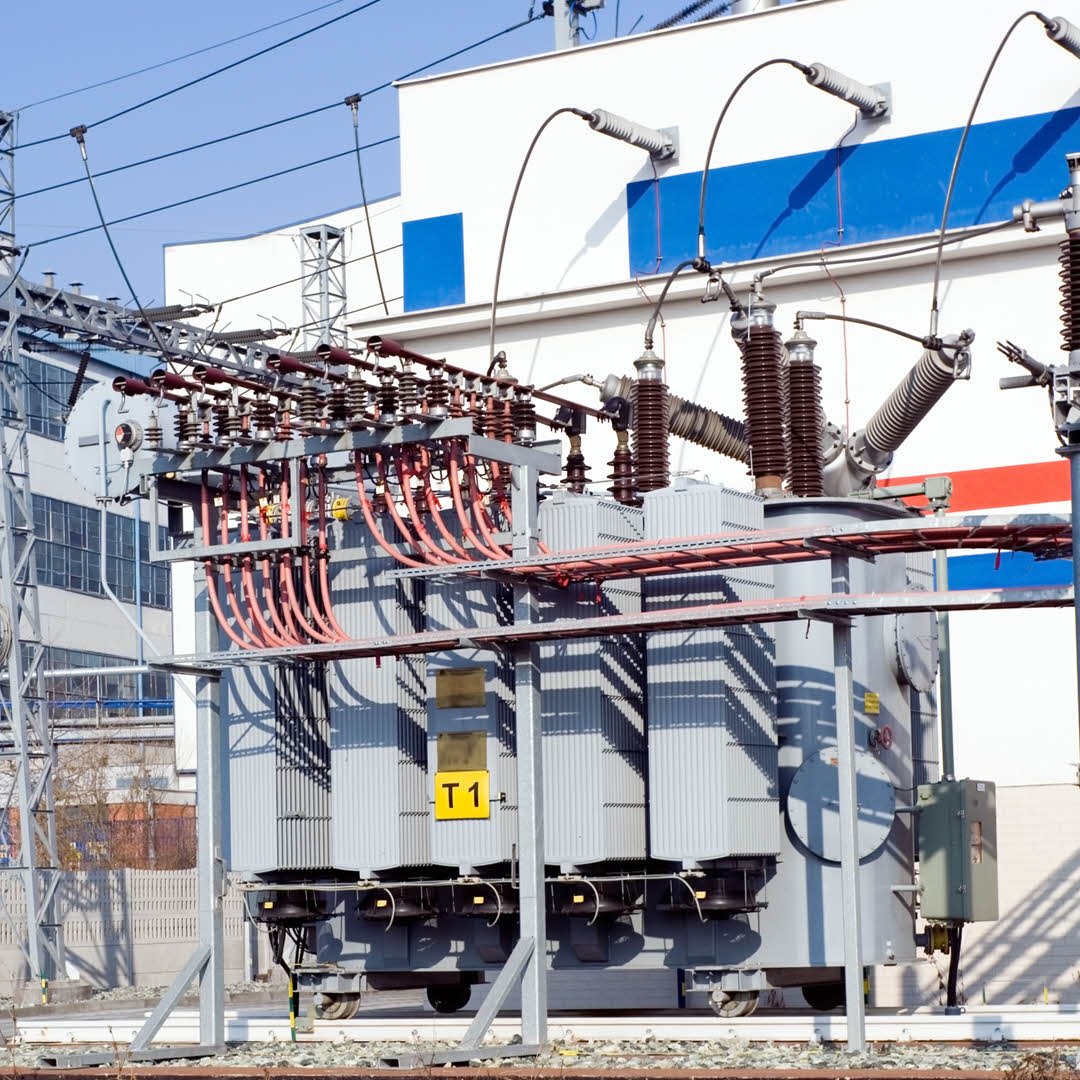
This is deeply unfair to the transformer, which has been quietly doing civilization’s laundry for more than a century. Electricity does not simply leap gracefully from a power plant into a data center like a venture capitalist entering a panel discussion. It must be moved, managed, transformed, controlled, and delivered. Transformers make that possible. They are among the essential organs of the modern power system, even if nobody writes breathless magazine profiles about them titled “The Machine That Changed Everything While Sitting Behind a Fence.”
Without transformers, the fantasy collapses. No factories. No neighborhoods. No electric vehicles. No renewable installations. No data centers. No artificial intelligence pretending to have feelings about your quarterly report. The cloud, it turns out, requires a substation.
This has created a delicate problem for the apostles of infinite scale. Software can be duplicated almost instantly. Code can be updated overnight. A startup can become worth $40 billion before lunch if enough investors agree to hallucinate in the same direction. But transformer factories do not operate on vibes. They do not respond to inspirational LinkedIn posts. They cannot be accelerated by putting “AI-powered” in front of the word “transformer.”
Large transformers are not something one orders with two-day shipping. They are enormous, specialized machines made from electrical steel, copper, oil, insulation, skilled labor, and a certain old-world patience that cannot be downloaded. Some are built to order. Some weigh hundreds of tons. Many require skilled winding and manufacturing expertise that is not magically produced by telling the labor market to “disrupt itself.”
This must be a terrible shock to a culture accustomed to a confusing announcement of achievement, which has not yet achieved anything. In the public performance economy, everything is immediate. A president declares “energy dominance,” and applause follows. A CEO announces a trillion-dollar AI buildout, and stock prices tremble with spiritual purpose. A consultant publishes a chart showing exponential growth, and everyone nods as though the grid has agreed.
But somewhere, in a factory that smells like metal, oil, and reality, a worker is still winding copper.
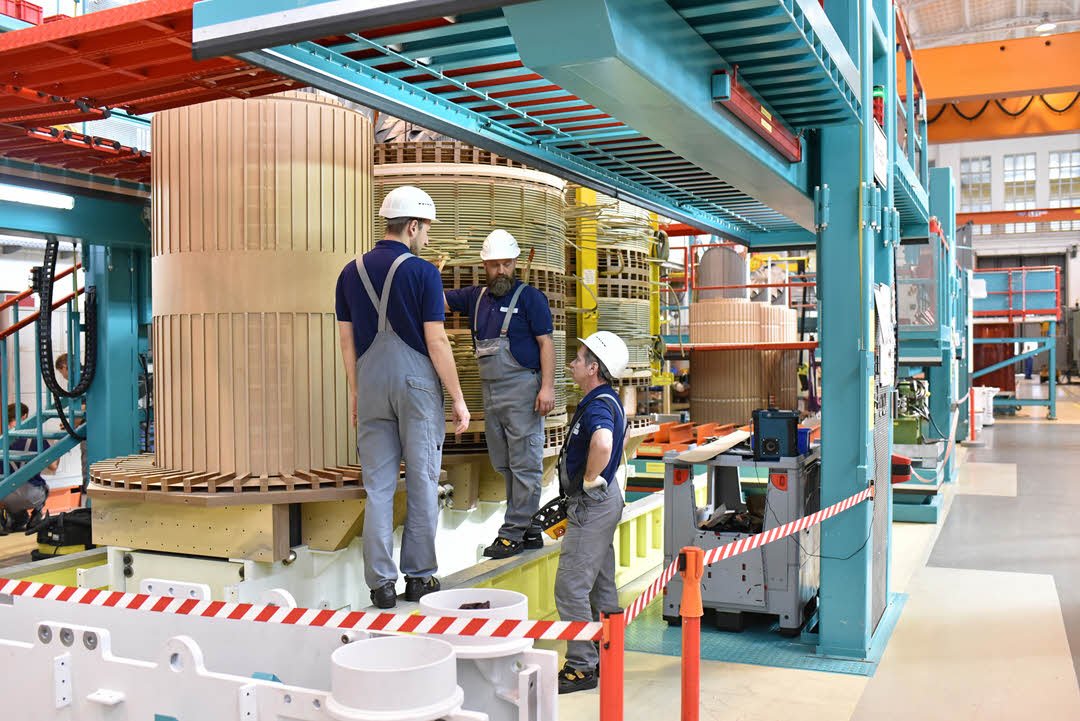
That worker is now one of the most powerful people in the AI economy, though no one has bothered to tell him. The future may be artificial, but the bottleneck is extremely real. It has fingerprints. It requires training. It has lunch breaks. It knows that “move fast and break things” is a less charming motto when the thing you break is the electrical grid.
The irony is almost too elegant. The industry that promised to free us from physical limitations now needs thousands of acres, vast water resources, enormous power connections, backup systems, substations, transmission upgrades, and specialized equipment with lead times measured not in sprints, quarters, or hype cycles, but in years.
The cloud has become a landlord.
And not a modest one. Modern AI data centers can require the power of small cities. They are not little server closets humming politely in the corner. They are industrial beasts, temples of computation, each packed with equipment that consumes power, throws off heat, demands cooling, and must remain online with near-religious reliability. Because no company wants its billion-dollar AI model to pause mid-sentence and say, “I’m sorry, but a squirrel has entered the substation.”
So data-center operators order backup systems. Redundant equipment. Extra transformers. Parallel feeds. More reliability. More power. More capacity. The result is a technological arms race in which everyone is building the future at once and discovering that the future uses the same supply chain.
Meanwhile, utilities are trying to serve ordinary customers, replace aging equipment, connect renewables, harden the grid, recover from storms, and prepare for electrification. They, too, need transformers. So do housing developments. So do factories. So do solar and wind projects. So do charging networks. So does everyone who enjoys lights, refrigeration, and the continued operation of society.
Into this already strained system marches the AI industry, wearing a cape and asking whether it can have enough electricity to power Nebraska by Tuesday.
This is where political theater enters, carrying a flag and a microphone. We are told, with great seriousness, that America will dominate energy, AI, manufacturing, the future, dominance itself, and perhaps the word “dominate” until it files a complaint. But domination is difficult when your grid equipment is backordered until the next administration, the next business cycle, and possibly the next round of presidential golf biographies.
The gap between rhetoric and reality could power a modest suburb if only someone could find the transformer.
This is the lesson. American politics loves the performance of power. It loves the announcement, the slogan, the executive order, the ribbon-cutting, the hard hat worn incorrectly for 11 minutes beside people who actually understand the project. But infrastructure is not impressed. It does not care about press conferences. It does not vote. It does not flatter. It does not trend.
A transformer cannot be bullied into existence.
You cannot insult copper into becoming more available. You cannot tariff your way around skilled labor shortages without creating new problems. You cannot declare a supply chain “beautiful” and expect electrical steel to appear in a patriotic fog. You cannot build the future by yelling at the present.
And this is the great comedy of the AI boom. The most advanced technology in the world is being slowed by equipment that is boring, heavy, and absolutely indispensable. The digital economy has run face-first into the industrial economy and discovered that the industrial economy was not sitting around waiting to be called obsolete.
There is something healthy about this embarrassment. It reminds us that civilization is not made of apps. It is made of systems. Pipes, wires, transformers, roads, workers, permits, factories, maintenance crews, boring financial budgets, and people who know how things actually function. The invisible world beneath the spectacle is not optional. It is the thing that keeps the spectacle illuminated.
Perhaps AI will change the world. Perhaps it will improve medicine, science, logistics, education, energy, and countless other fields. Perhaps it will also generate seven million fake articles about how to clean your air fryer. Both futures remain possible.
But before the machines can think, the grid must hold.
Before the chatbot can explain democracy, someone must connect the substation.
Before the cloud can become omniscient, a transformer must arrive on a truck traveling very slowly under escort because it weighs more than ambition.
So the next time a politician promises instant energy dominance or a tech executive announces a glorious AI future, remember the humble transformer. It is not glamorous. It does not give keynote speeches. It does not appear in campaign ads. It has no verified account. It cannot be made great again by slogans.
It simply sits there, doing the work.
Which may be why it is in such short supply.

Now available on Amazon Kindle!
A book about the travels of Donald J Trump as he visits many strange and humorous places and leaves each place perhaps a bit wiser and without getting into any trouble.

For fans of the book Gulliver's Travels.