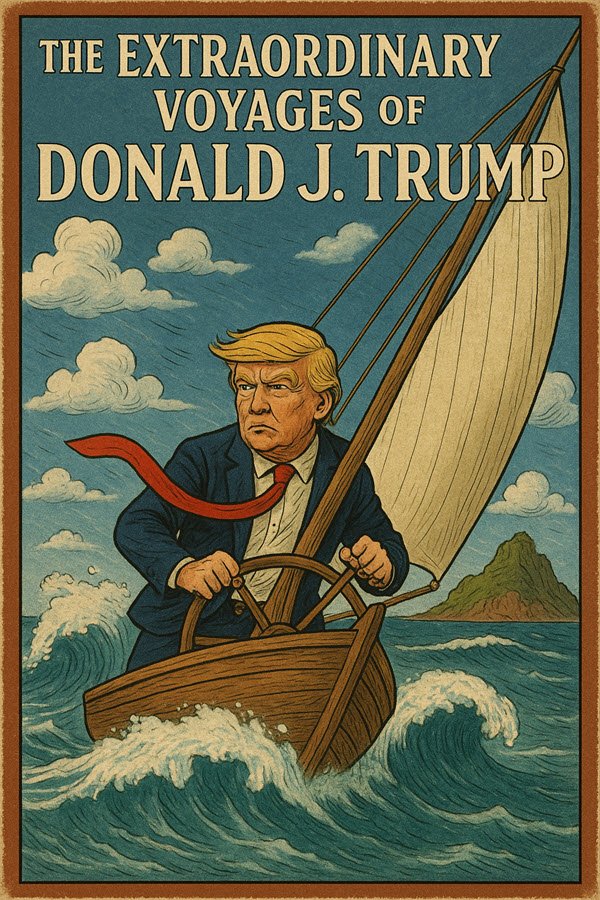
The Resurrection of Strategic Theology
There was a time—not so very long ago, though it now feels like a previous civilization—when Easter Sunday was reserved for modest things: hymns, lilies, quiet reflection, and the gentle reassurance that something once buried might rise again with dignity.
Now, it appears, Easter has been upgraded.
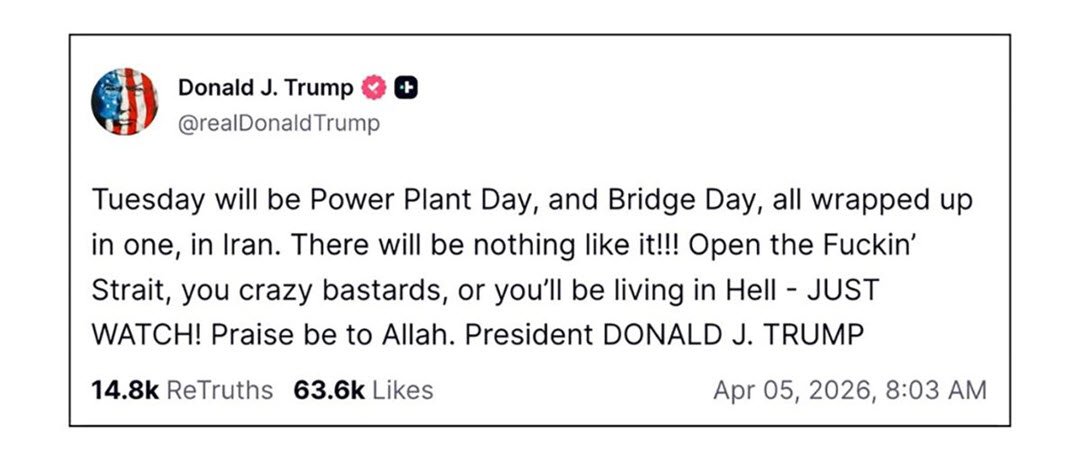
No longer content with resurrection, we have embraced detonation & Destruction.
This past holy day, President Donald J. Trump delivered what scholars will surely come to recognize as a new literary form: the Apocalyptic Social Media Proclamation. It was a work of great theological ambition, combining threats of military action, bursts of expletive enthusiasm, and an interfaith flourish that concluded—most ecumenically—with “Praise be to Allah.”
It is rare, in the history of Western civilization, to see Pentagon strategy, Sunday sermon, and late-night rant woven so seamlessly into a single text.
The result was, by all accounts, stirring.
A retired general, a man presumably accustomed to the mild inconveniences of war planning, responded not with applause, but with something approaching alarm. He suggested, in a tone bordering on clinical understatement, that the Commander-in-Chief might benefit from a brief excursion to Walter Reed for “testing”—a proposal which, in earlier centuries, would have been described as “checking whether the king will be able to pass the Montreal Cognitive Assessment.”

But let us not be too hasty in judgment.
For what appears to the untrained observer as chaos may, in fact, be a bold new doctrine: Strategic Uncertainty as Divine Messaging.
Consider the elegance of the statement:
- Tuesday shall be “Power Plant Day”
- And also “Bridge Day”
- All delivered with the festive enthusiasm of a holiday sale announcement
This is not mere policy. This can be thought of as liturgy.
One can imagine future historians parsing the sacred text:
“And lo, on the third day after Easter, infrastructure itself did tremble.”
The addition of “Praise be to Allah,” meanwhile, deserves special commendation. In a single phrase, the President managed to unify multiple theological traditions under the banner of impending destruction—a feat that has eluded diplomats for centuries.
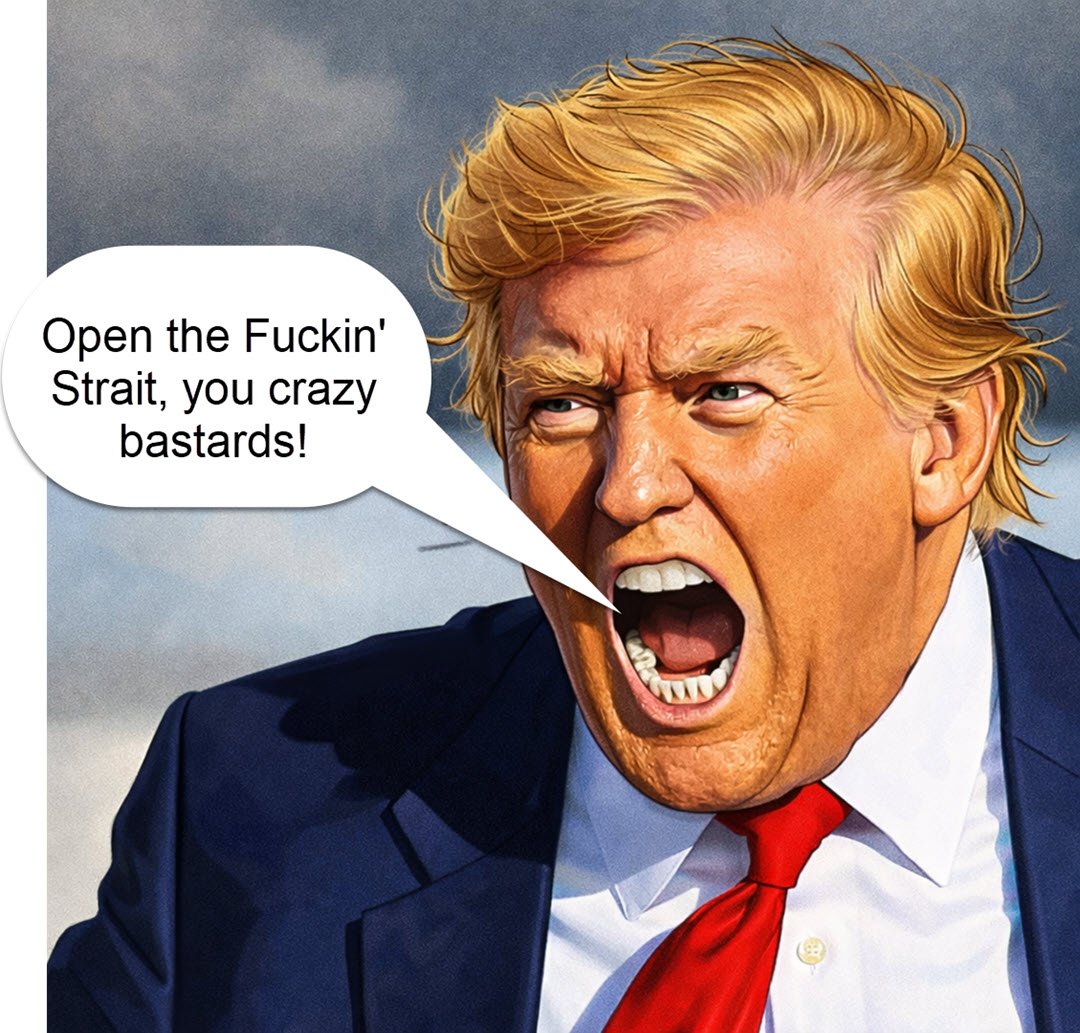
Interfaith dialogue, it seems, has finally found its purpose.
Yet beneath the grandeur lies a modest concern: that such pronouncements may not, in fact, encourage calm reflection among the intended audience. Indeed, our wise general suggested—again, with admirable restraint—that threatening to turn another nation’s infrastructure into pictures in a themed calendar might “harden resolve.”
This is, admittedly, a drawback.
For there exists a long-standing diplomatic principle, rarely spoken aloud, that people tend to resist being informed they will soon be “living in Hell,” even when the announcement is delivered with the proper punctuation.
Still, we must admire the innovation.
Why rely on tedious backchannel negotiations when one can simply declare one’s intentions in a well form tweet? Why cloak strategy in secrecy when it can be broadcast like a revival meeting?
In this new era, war is not merely conducted—it is performed.
And so, we arrive at the true miracle of Easter 2026:
Not the resurrection of a dead savior, but the resurrection of a far older idea—that certainty, loudly proclaimed, can substitute for wisdom.
We pray.
We speak.
We act.
And somewhere, one suspects, the heavens are watching—not with approval, nor even with dismay, but with the weary patience of one who has seen this sermon preached before.