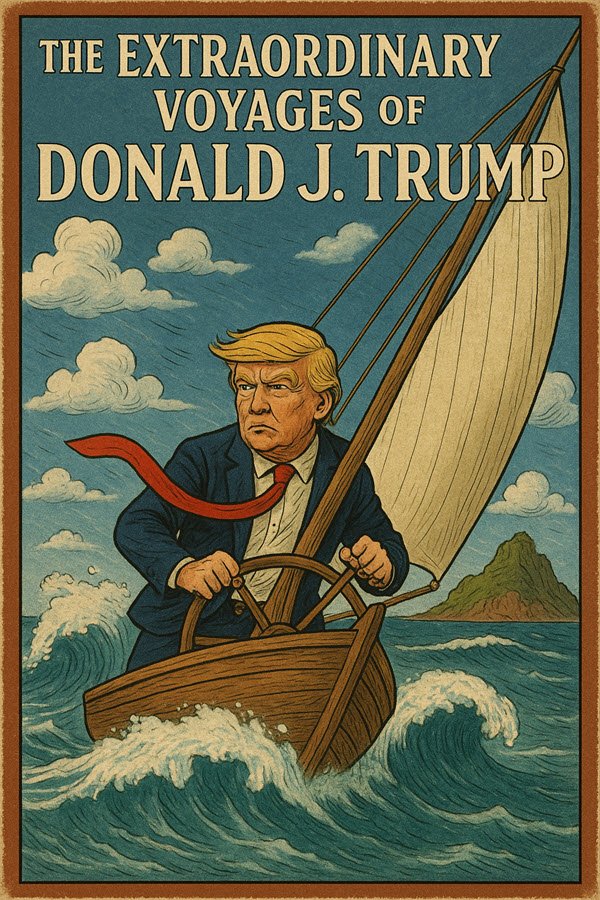
Diplomacy by Pay-Per-View
There was a time when the conduct of foreign policy required a certain degree of solemnity. Men gathered in quiet rooms, spoke in careful tones, and occasionally pretended to understand the consequences of their decisions. That era, like so many others, has now been replaced by something far more efficient: the UFC weekend summit.
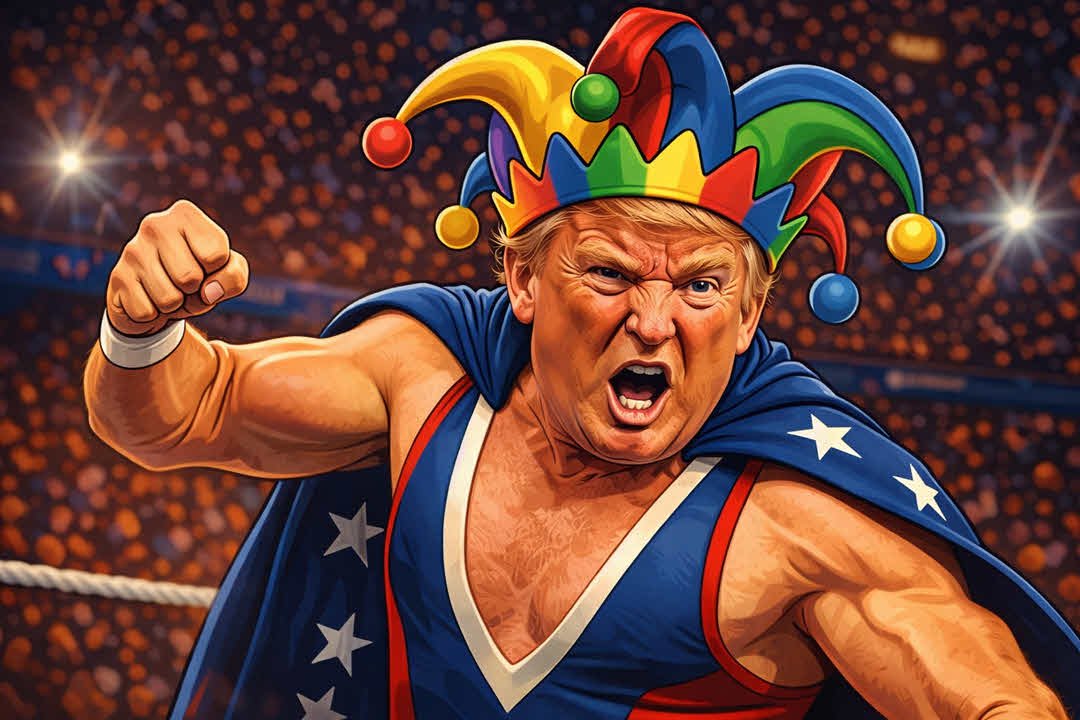
On Saturday, April 11th, as delicate negotiations unfolded regarding Iran, the Strait of Hormuz, and the minor inconvenience of potential regional war, President Donald J. Trump attended a UFC match. This was not, we are assured, a distraction. It was, rather, a demonstration of leadership—specifically, the kind that prefers its conflict contained within an octagon, preferably with ticket sales.
Meanwhile, somewhere else—one assumes near a folding table and a misplaced map—the Vice President, J.D. Vance, along with Jared Kushner and Steve Witkoff, were entrusted with the task of navigating one of the most complex geopolitical crises of our time. It is a testament to modern governance that such responsibilities can be assigned with the same casual confidence one might display when delegating the purchase of snacks.
Mr. Kushner, of course, brings a wealth of experience in being related to the President, while Mr. Witkoff contributes the invaluable skill of being present. Together, they form what experts might describe as a team.
Back at the arena, the cast of characters assembled offered its own form of diplomacy. Joe Rogan, recent critic and former enthusiast, appeared in attendance, shaking hands with the very man he has lately suggested should not be in power. This, we are told, is not contradiction but nuance—a subtle distinction best appreciated at close range and under bright lights.
And then there is Secretary of State Marco Rubio, who also attended the event. It is unclear whether his presence was ceremonial, observational, or simply a reflection of scheduling priorities that place cage fighting slightly above international negotiation. One assumes that if a ceasefire had broken out between rounds, he would have been immediately informed.
The true genius of the moment lies in its coherence. For what is modern diplomacy, if not a form of performance? And what better venue for performance than an arena dedicated to spectacle, where conflict is simplified, outcomes are decisive, and no one is required to read a briefing memo?
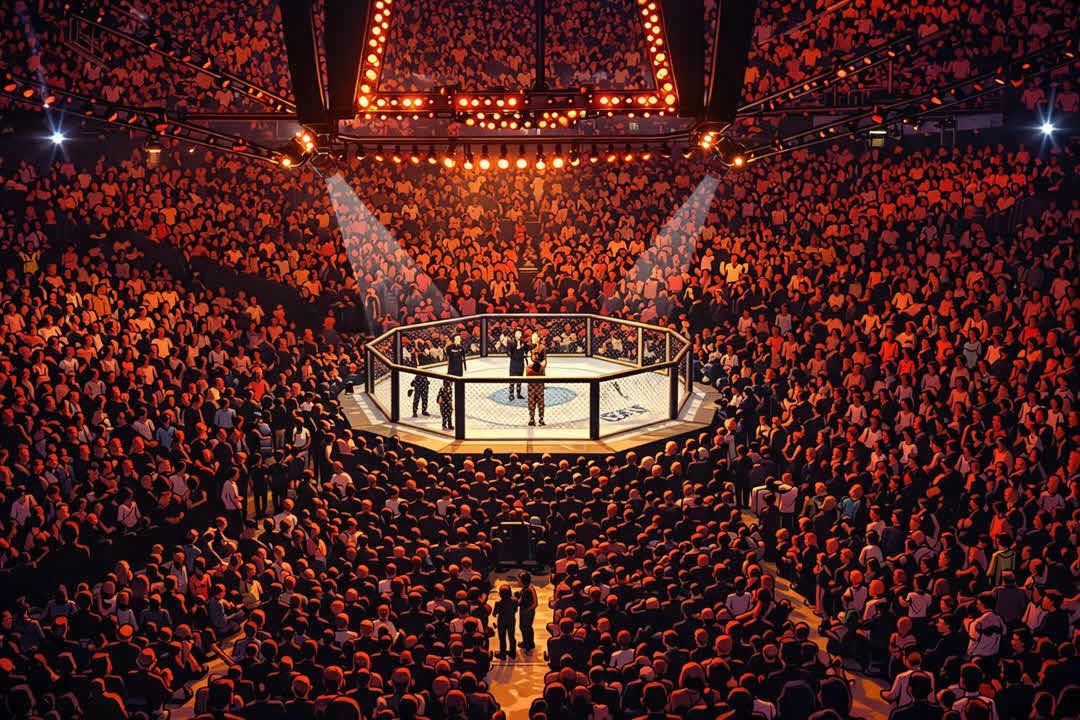
Thus, the world turns. Negotiations proceed—or at least, something resembling them does. Markets react, tensions rise, and the machinery of state continues its steady transformation into theater.
And somewhere, beneath the roar of the crowd, one can almost hear the quiet, persistent question:
Who, exactly, is in the room where it happens?
The answer, it seems, depends entirely on which ticket you bought.