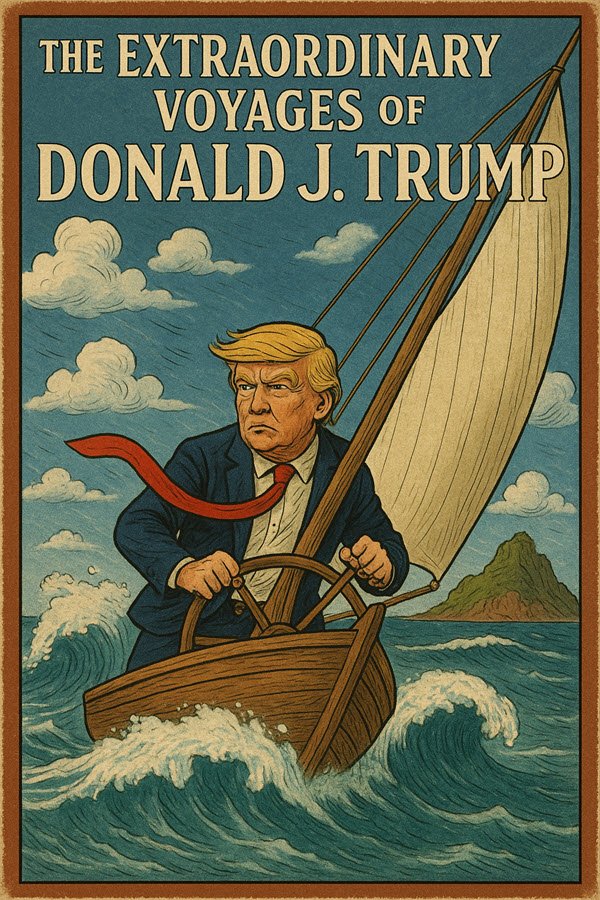
Donald Trump has encountered a deeply troubling foreign-policy problem.
Iran will not do what he tells it to do.
This is particularly confusing because Trump has already tried nearly everything in his diplomatic toolbox: threats, bombing, more threats, name-calling, negotiations, abandoning negotiations, returning to negotiations, and becoming personally offended when the other side fails to appreciate what a tremendous opportunity agreeing with Donald Trump is.
And yet Iran persists.
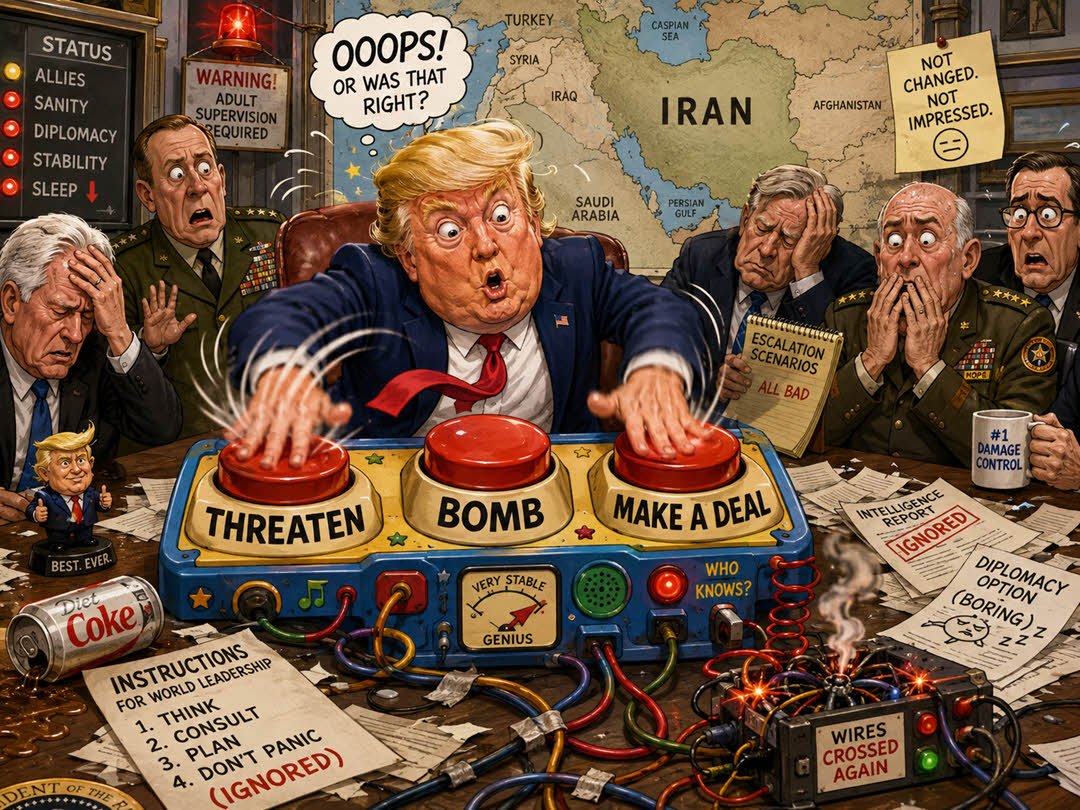
At a NATO summit in Ankara, Trump reportedly called Iran’s leaders “scum” and complained that “all they do is make me angry.”
There, in nine words, is the Trump Doctrine.
Not containment.
Not deterrence.
Not balance of power.
They make me angry.
Henry Kissinger spent decades studying diplomacy. George Kennan wrote lengthy analyses of Soviet behavior. Trump apparently studies international affairs by determining whether another country has hurt his feelings before lunch.
The underlying problem is considerably more serious.
Iran is governed by people shaped by decades of revolution, war, sanctions, religious ideology, nationalism, internal repression, regional rivalry and institutional survival. Understanding how such a regime thinks requires intelligence work, historical knowledge, cultural expertise and the uncomfortable willingness to consider that your enemy may not behave according to your preferred television narrative.
That sounds exhausting.
Much easier to call them scum.
Trump seems perpetually astonished that Iran absorbs punishment, recalculates and continues bargaining. He appears to believe international negotiations should resemble purchasing carpeting: threaten to walk out, insult the salesman, demand 40 percent off, and eventually everyone shakes hands because the customer is always Donald Trump.
Unfortunately, Iran has missiles.
The pattern has become almost comically circular.
Trump negotiates.
Trump receives criticism for negotiating.
Trump becomes furious about the criticism.
Trump threatens Iran.
Iran refuses to surrender.
Trump considers military action.
Military action creates new problems.
Trump discovers the military options are unpleasant.
Trump returns to negotiations.
Then someone criticizes him for negotiating.
Reset the clock.

This is less a foreign policy than one of those amusement-park rides where everyone keeps passing the same plastic pirate every ninety seconds.
The danger is that presidential irritation is being substituted for strategy.
Experienced Iran analysts argue that Washington repeatedly misjudges what Iranian leaders value, how much punishment they will tolerate and what pressures actually change their calculations. If so, every threat based on a faulty assumption does something worse than fail: it teaches the other side exactly how much bluffing Washington is willing to tolerate from itself.
Iran meanwhile has strengthened its leverage around the Strait of Hormuz, while American policymakers confront uncomfortable questions about depleted interceptor and missile inventories and the limits of additional military strikes.
That leaves Trump confronting the geopolitical reality he hates most:
There may be no tremendous option.